
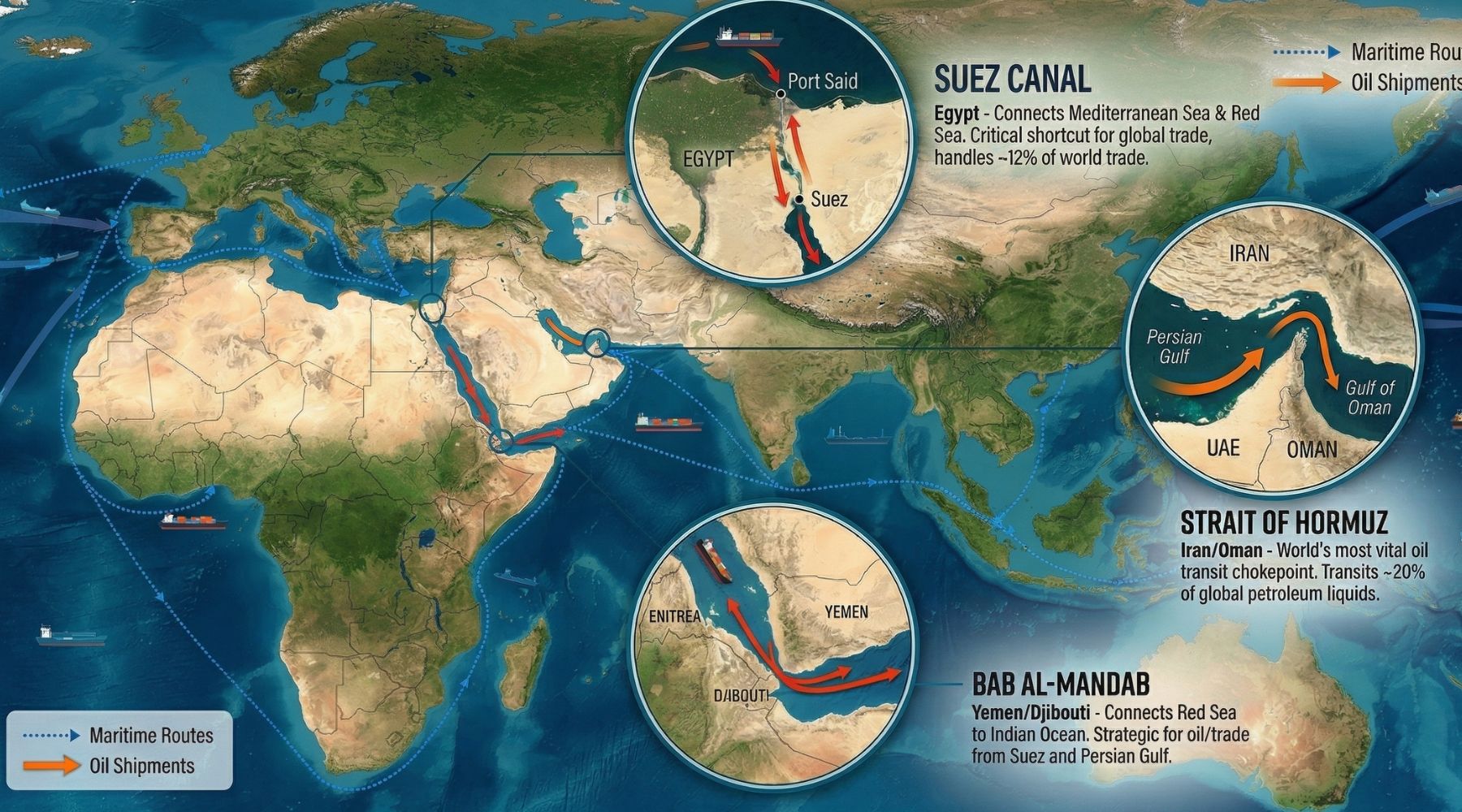
For nearly a month now, the Strait of Hormuz has been closed to most shipping, which includes 20% of the world's oil production. As of April 13th, that crisis escalated further: the U.S. began blocking ships from entering or exiting Iranian ports, after peace talks in Islamabad collapsed without a deal. Iranian-backed Houthi rebels in Yemen are also threatening to close the Bab al-Mandab strait, which carries another 15% of global shipping and 10% of the world's oil.
[Table-of-Contents]
Closing the Bab al-Mandab effectively makes the Suez Canal pointless. All of this comes at a time when U.S. airports are already stretched thin over TSA funding shortfalls. The confluence of events may not shut down supply lines entirely, but it's an excellent case study for preparedness, and a signal that now is the time to act. If you haven't started yet, our guide on how to pack a go bag kit is the most practical first step you can take today.
Austin-Bergstrom International Airport Shutdown
For the purposes of this case study, we’ll take Austin-Bergstrom International Airport and examine the regional impact of any shutdown. It’s not the busiest airport in the world, nor does it serve as a critical link in airfreight such as Memphis International Airport, which serves as the headquarters of FedEx.

Image source: Pexels
The global events underway right now are not likely to cause any nationwide shutdown as the United States is less reliant on oil from the mideast than other countries. A regional impact is more likely to occur, and prepared persons should know how to recognize the signs that it is coming and what to expect afterwards. The event which caused the shutdown could be anything from a severe weather event, fuel shortages, or an active act of sabotage and terrorism. Not only is travel impacted, but so is air freight in and out of the airport. Let’s talk about what happens next and how a prepared civilian should act.
What Happens In The First 48 Hours After an Airport Shutdown?
The impact on the first 48 hours of shutdown is not something we have to speculate about as we have a modern case example to explore. At 9:45 AM on September 11th, 2001, the entire North American airspace was closed to all non-military air traffic. The airspace would remain closed for two days with only military flights allowed.

Image source: Pexels
The immediate and obvious impact was that persons became stranded when their planes were forced to land at various airports. If Austin-Bergstrom airport were to close, the immediate impact would be angry travelers whose plans were disrupted. Vacations cancelled and reuniting with loved ones delayed. This would be inconvenient, but bearable.
A better question to examine is to understand the impact on airfreight. In the aftermath of 9/11, supply chains ground to a halt, but most industries had enough inventory on hand to ensure that any disruption was minimal. However, since 9/11, shipping and logistics has become more efficient, leading industries to adopt what is known as a just-in-time supply chain. The store shelves are always stocked because new inventory is already on the way based on expected demand. As such, the first 48 hours of an airport shutdown at Austin-Bergstrom would resemble little more than riding a snow storm.
The First Week of The Airport Shutdown at Austin-Bergstrom
With the impact on the first 48 hours being minimal, signs of cracks in the supply chain would begin to show up over the next 5 days. Any airfreight intended for Austin would likely get rerouted to Dallas or Houston and then shipped by truck to its original destination. This would put a strain on existing logistics, which could create a backlog of various goods.
As certain shelves begin to show up empty, people begin buying items in bulk. This is what we witnessed during the great toilet paper shortage of COVID-19. This creates what is known as an information cascade. People see others buying these items in bulk, and though you feel that you have enough resources, you are compelled to join in. You buy because others are buying, despite what your own facts tell you.
The greatest threat to the supply chain during any regional airport shutdown would be the buying behavior of other people (availability heuristic). The more you can think of examples of supply shortages, the more common you think such events take place. Your brain is wired for survival and it senses a threat, which causes you to override reason. This is another element that demonstrates the wisdom of prepping. You are pulling yourself out of this urgency loop and allowing yourself to assess the situation before you feel compelled to act. Knowing what survival essentials most people overlook before a crisis hits is exactly the kind of preparation that keeps you out of that panic-buying loop.
The First Month of a Regional Supply Chain Disruption
Here is where events start to become more impactful. With global shipping disrupted and regional airfreight shut down, industries begin to see a noticeable impact in their ability to produce essential goods. For example, 88% of active pharmaceutical ingredients (APIs) used in U.S. medicines are produced outside of the United States. China and India account for 80% of those ingredients.

Image source: Pexels
Despite America’s great technological advantages, the U.S. holds only 12% of the world’s capacity to produce semiconductors which are essential elements in nearly all modern technology. This is where the pain of any supply chain disruption begins to really hurt. Actual supply shortages combined with the panic buying behavior of the U.S. consumer means everything from basic pain relievers, such as acetaminophen, to cell phones become scarce. If Austin-Bergstrom Airport were shut down for this duration, Austin would experience harsher realities of this disruption.
How to Prepare for Regional Supply Chain Disruptions
As it currently stands, global shipping disruptions or regional airport shutdowns wouldn’t create a bug-out situation. If Austin-Bergstrom were to shut down, we don’t recommend you quit your job and head for your mountain refuge. Rather, you can take basic actions that will allow you to ride out this storm with a similar quality of life.

Knowing that 88% of all APIs are produced outside the United States and how quickly a simple fever can become serious for a small child, perhaps adding some extra children’s Tylenol or Ibuprofen to your shopping cart would be prudent. Here at MIRA Safety®, for example, we are anticipating the possible impacts of rising oil costs and shipping disruption on our supply of professional-grade gas masks, and we're working hard to keep them within reach of every American's budget regardless of what happens to shipping costs.
Certainly, standard prepping rules still apply. Humans are the wildcard and when resources become more scarce, humans can become more dangerous. If you have never considered this before, now is the time to take this into account. If you are new to prepping and unsure where to begin, our gas mask buyer's guide walks you through everything you need to know to make a confident first purchase, without overspending on gear that won't actually protect you.
Are There Signs To A Global Crisis?

As we conclude, we want to point out that history suggests that a global crisis rarely introduces itself as such ahead of time. World War 1 was originally called 'The Great War' because no one had any idea that World War 2 was around the corner. When rumors of a respiratory virus began to emerge from Wuhan, China, the words ‘global pandemic’ were nowhere near the forefront of people’s minds.
A global crisis doesn’t announce itself, but there are warning signs. Signals are sent and the most observant and prepared can pick up on them. The conflict in Iran and the subsequent impact on oil and shipping is one of them. Travel disruptions at airports across the nation are a warning sign that critical infrastructure is stressed right now.
Take a look at all the essential items your family uses on a daily basis and find out where it’s made or produced. If any of it requires international shipping for the end product, or raw materials such as pharmaceuticals, maybe buy a little extra if you can afford it. Do that before everyone else starts doing it and the information cascade kicks off panic buying.
Finally, if you've never prepared a day in your life, now is the time to get started. Yesterday was always the best day to prepare, but the second best day is always today. Start with one essential item at a time, and if you're not sure where to begin, our guide on how gas masks work and what they actually protect against will help you make the right first purchase. Your family is counting on you to lead them through the next crisis, and recognizing the early warning signs will help you stand ready to face the day that most people dread.
[FAQ]
About the author


