


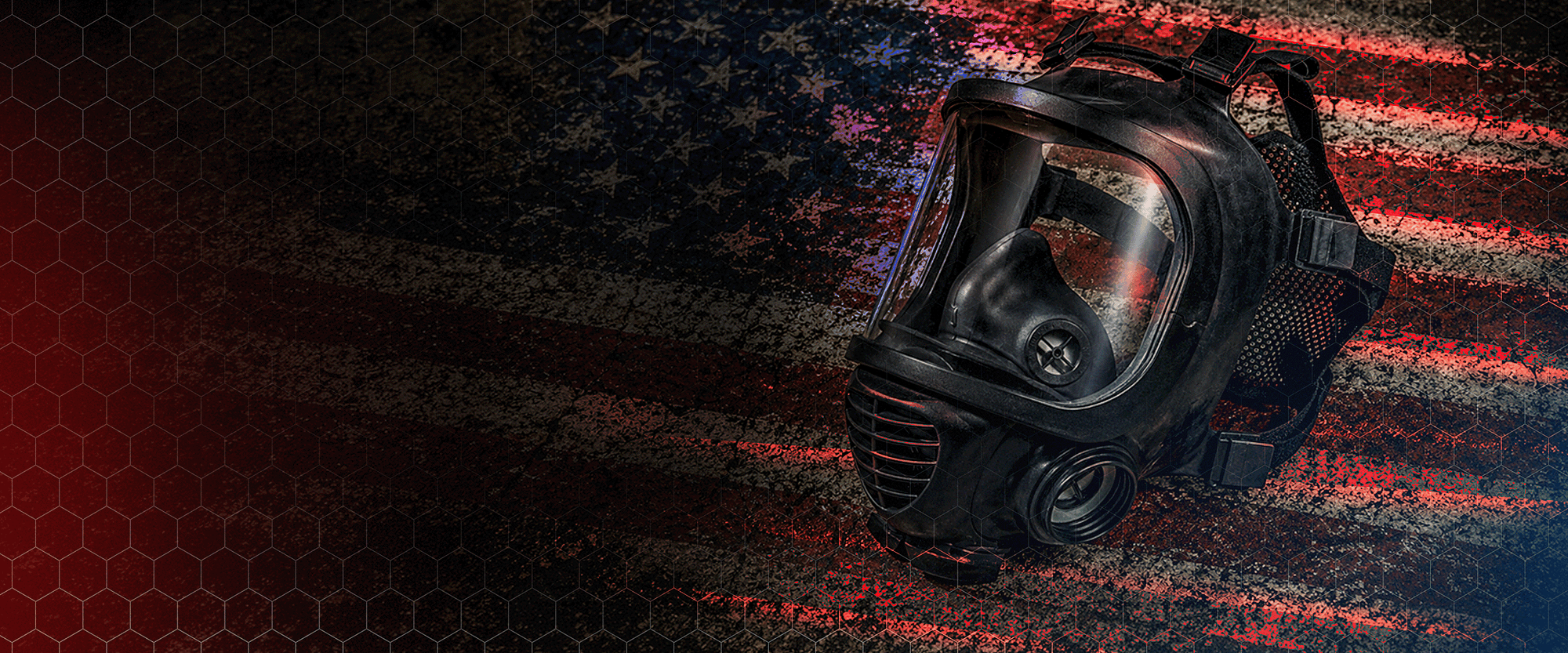
Some respirators have a small sticker near the filter housing. It lists an approval number, a testing lab, and a regulation code. That code is 42 CFR 84. Most people have never looked for it, and strangely enough, most gas markets available on the market today don’t have one.
What that sticker means is an independent lab tested the respirator against a federal standard. Without it, as the customer, you’re just trusting the manufacturer’s word that the mask works.
NIOSH certification is one of the most common technical questions we get. For example, is your mask N95 or P100 rated is one we got a lot. It comes from procurement officers, safety directors, and from buyers who have done their homework and are knowledgeable to ask. If you're brand new to masks as respirators, read our previous post on why everyone should have a gas mask. The article covers what NIOSH certification is, why most CBRN (which stands for chemical, biological, radiological, and nuclear) masks don't have it, and is our CM-6M mask certified. As of July 2026, we have started the process to pursue NIOSH certification for our CM-6M masks that we are assembling in America.
|
TL;DR: NIOSH certification is a testing program done by the federal government. Most CBRN gas masks are not NIOSH certified. It’s because the standard testing that is available today was built for industrial respirators and not CBRN threats. |
What Is NIOSH Certification? (NIOSH Meaning Explained) What Does NIOSH Certification Actually Test? Why Aren't Most CBRN Gas Masks NIOSH Certified? What They're Tested Against Instead Is the CM-6M NIOSH Certified? Where Our Gas Mask Stands Today How to Verify NIOSH Certification for Any Respirator (Step-by-Step) The Bottom Line: What NIOSH Certification Means for Your Next Gas MaskTable of Contents
What Is NIOSH Certification? (NIOSH Meaning Explained)
NIOSH, the National Institute for Occupational Safety and Health, is a federal agency under the CDC. It's not OSHA, even though the two get confused constantly. OSHA writes and enforces workplace safety regulations. NIOSH does the research and testing. When an OSHA rule requires a “NIOSH-approved respirator,” NIOSH is the agency that actually went through the process and tested the equipment.
The certification for respirators under NIOSH is called 42 CFR Part 84. It is a federal regulation with defined performance requirements. A respirator has to pass testing in a NIOSH-accredited lab before it can legally carry that label. A company can’t award that certification to itself either.
A respirator that passes gets an approval number. That number goes on the NIOSH Certified Equipment List. That is a public database anyone can search. If a mask claims NIOSH approval and isn’t on that list, the claim is false.
What Does NIOSH Certification Actually Test?

Source: MIRA Safety®
This is also where marketing copy from some manufacturers becomes vague, and on purpose. Under 42 CFR 84, NIOSH tests how well a filter blocks particulates by measuring how much of a test aerosol gets through. The N95 and P100 ratings on industrial and medical respirates come from this same framework.
The testing then goes beyond filtration. It covers exhalation valve function, fit protocols, breathing resistance, and quality-control checks the manufacturer has to keep passing even after approval. For the basics of filtration and fit, our breakdown of how gas masks works covers it in an easily-understandable way.
What standard NIOSH testing does not cover is chemical warfare agents, biological threats beyond basic particulates, and radiological particles, also known as CBRN. That’s a separate testing pathway, and it is where most of the confusion from this topic starts from.
Why Aren't Most CBRN Gas Masks NIOSH Certified? What They're Tested Against Instead
Most full-face CBRN gas masks do not carry NIOSH certification, and that includes some of the most respected names in military and tactical gear manufacturing. It’s not because these companies are cutting corners. NIOSH’s standard track was built for industrial particulate respirators. There is a separate NIOSH pathway for CBRN masks, built for law enforcement and first responders. It involves live chemical agency testing that standard certification never touches.
Military and tactical masks are usually tested against NATO or U.S. military standards or specifications. Some manufacturers also pursue NIOSH’s CBRM pathway. Most don't because live-agenda testing requires specialized facilities and serious investment.
A mask can protect against CBRN threats without holding NIOSH approval. Plenty of proven masks, used by military forces around the world, skip the NIOSH pathway because it is slow and expensive. What matters most is which standard the mask was actually tested against and whether the documentation from the manufacturer can be easily found and reviewed.
|
Standard NIOSH (42 CFR 84) |
NIOSH CBRN Pathway |
Military/NATO Specs |
|
|---|---|---|---|
|
Tests |
Particulate filtration, fit, construction |
Chemical agent + biological + radiological, live-agent protocols |
Varies by country; often broader agent panel |
|
Common on |
N95, P100, industrial respirators |
Law enforcement / first responder full-face masks |
Military-issue CBRN masks |
|
Cost/time to obtain |
Established process, moderate cost |
Extensive live-agent testing, high cost, long timeline |
Varies; often internal to defense procurement |
|
Public verification |
NIOSH Certified Equipment List |
NIOSH Certified Equipment List (CBRN category) |
Manufacturer/government documentation |
|
None of this means "buyer beware" across the board. It means: ask the manufacturer directly which standard their mask is tested against, ask for the documentation, and understand that "military-grade" and "NIOSH CBRN certified" are two different claims that happen to sometimes overlap. |
Is the CM-6M NIOSH Certified? Where Our Gas Mask Stands Today

Source: MIRA Safety®
The CM-6M is used by military and law enforcement units in more than 50 countries. It carries CE certification and has been tested against chemical warfare agent simulants and live agents in accredited labs.
What it doesn't have yet is NIOSH CBRN approval. We're pursuing it now for the CM-6M assembled in America. The process involves live chemical agent testing in a NIOSH-accredited facility plus documentation of our manufacturing quality control, and once testing starts, the timeline runs months, not weeks.
Law enforcement and public safety agencies ask us about this during procurement, and the honest answer is that independent verification beats our word for it.
If you're a procurement officer evaluating the CM-6M and this timeline affects your decision, call us. Let’s talk through the opportunity.
How to Verify NIOSH Certification for Any Respirator (Step-by-Step)
You shouldn't have to take any manufacturer's word for a safety claim this important, including ours. Here's exactly how to check:
-
Go to the NIOSH Certified Equipment List (CEL) at niosh-cel.dcs.cdc.gov — a free, public, searchable database
-
Search by manufacturer name or by the approval number printed on the respirator or its packaging
-
Confirm the exact model matches what you're holding: approval is granted to specific model configurations, not a brand as a whole
-
If a product claims NIOSH approval and doesn't appear on the list under that exact model, that claim is false. Report it and don't trust the product
This takes about ninety seconds and it's the single most useful thing we can tell you in this entire article. Do it before your next purchase, regardless of which brand you're considering.
The Bottom Line: What NIOSH Certification Means for Your Next Gas Mask
 Source: MIRA Safety®
NIOSH certification is real, it's specific, and it means something concrete when a respirator actually carries it. Most CBRN-specific gas masks on the market, including highly capable, genuinely protective ones, don't carry it, because the CBRN testing pathway is a separate and more demanding process than the standard particulate certification most people picture when they hear "NIOSH approved."
We'd rather tell you exactly where the CM-6M stands today: proven in the field, certified under CE standards, and actively pursuing NIOSH CBRN approval for our assembled in the USA version. When that certification comes through, you'll hear about it here first, with the documentation to back it up. If certification questions are just one piece of how you're thinking about readiness overall, our guide to essential gear for preparedness is a useful next stop.
Frequently Asked Questions
Is the MIRA Safety CM-6M NIOSH certified?
Not yet. The CM-6M carries CE certification and has been tested and used by military and law enforcement units in more than 50 countries, but it does not currently hold NIOSH CBRN approval. MIRA Safety is actively pursuing that certification now for the assembled in USA version and will publish an update the moment there's a real milestone to report.
What does "NIOSH approved" actually mean on a respirator?
It means the respirator passed testing under 42 CFR Part 84 in a NIOSH-accredited lab and received an approval number listed on the NIOSH Certified Equipment List. It's a specific, codified federal standard, not a marketing claim a company can just make.
Why aren't most CBRN gas masks NIOSH certified?
Because NIOSH's standard particulate testing (the same track that produces N95 and P100 ratings) wasn't built around chemical warfare agents. A separate NIOSH CBRN pathway exists, but it requires live-agent testing in specialized facilities and is far more expensive and time-consuming than standard certification. Most manufacturers, including highly respected ones, test against NATO or military specs instead.
How do I check if a respirator is on the NIOSH approved respirator list?
Go to the NIOSH Certified Equipment List (CEL) at niosh-cel.dcs.cdc.gov and search by manufacturer name or the approval number printed on the mask or its packaging. Confirm the exact model matches. Approval is granted to specific configurations, not a brand as a whole. It takes about ninety seconds.
Does a mask need NIOSH certification to be effective against CBRN threats?
No. NIOSH certification is one specific, verifiable standard, but a mask can be genuinely effective and well-tested through other pathways, like NATO standards, U.S. military specifications, or CE certification, without carrying NIOSH's CBRN approval. The key is knowing which standard a manufacturer actually tested against and asking for the documentation.
About the author

Leave a comment