


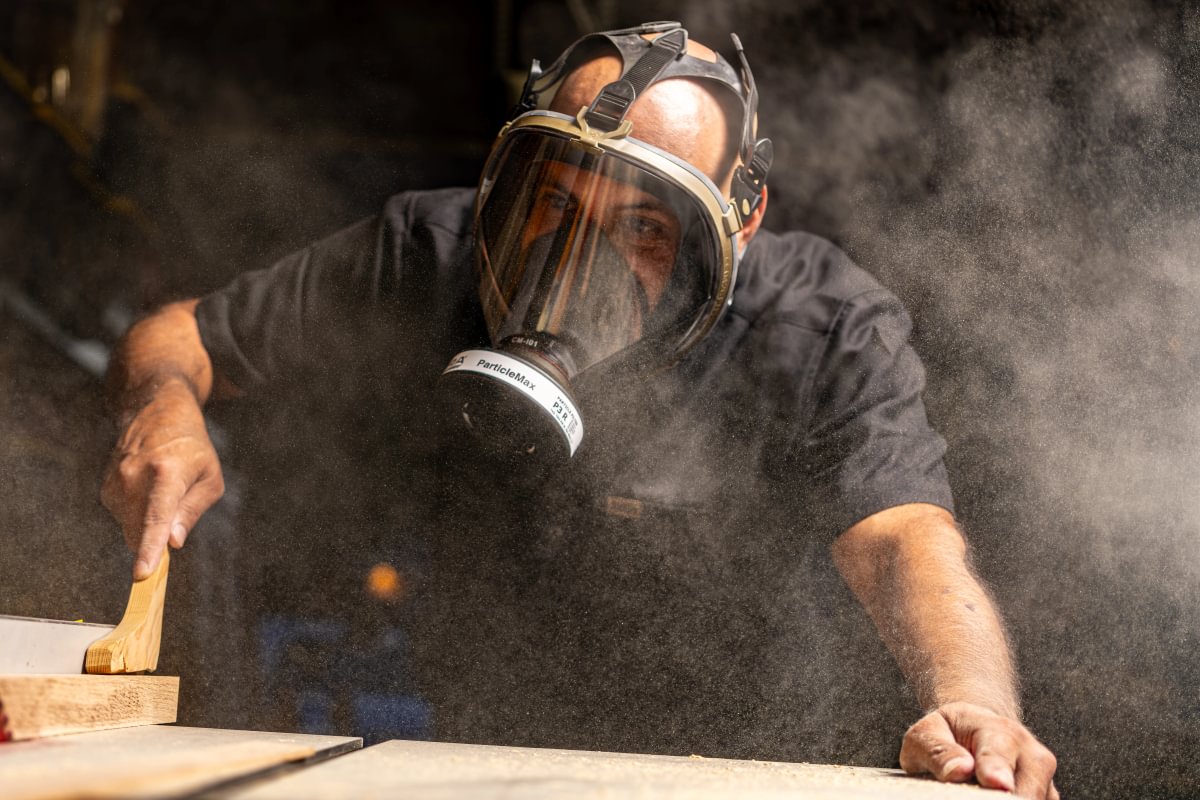
On May 21, 2026, a chemical tank in Garden Grove, California ruptured and released toxic methyl methacrylate vapor into a residential neighborhood. Residents within half a mile were told to shelter in place. Schools locked down. Families stuffed towels under their doors and prayed the windows were sealed tight.
None of that works. Not really.
A wet cloth over your nose doesn't filter volatile organic compounds. A cracked window seal won't stop a vapor cloud. And by the time you're googling "how to protect yourself from a chemical spill," you've already been breathing it for twenty minutes.
The families who were actually protected that day were the ones who had a full-face gas mask on the shelf before anything happened. That's it. That's the whole answer.
Introduction: Why a Gas Mask Matters More Than Ever The Threats Are Not Theoretical What a Gas Mask Actually Does Five Real-World Scenarios Where a Gas Mask Can Save Your Life Choosing the Right Gas Mask Choosing the Right Filter Why Proper Fit Matters Building a Complete Gas Mask Kit Why Every Household Should Own a Gas Mask Our Recommendation Final ThoughtsTable of Contents
Here at MIRA Safety, we've spent years watching people wait for a reason to get serious about preparedness, only to scramble after the fact. We're going to make the case today — clearly, without drama, and with specific product recommendations — for why a gas mask belongs in every prepared household in America. By the end of this article, you'll know exactly which one to get, how to fit it, and what filter pairs with it for your most likely threats.
A gas mask without a filter is just a Halloween costume. We'll make sure you have both — and know how to use them.
The Threats Are Not Theoretical
The most common objection we hear is a version of "that won't happen to me." Let's work through that.
Image source: wikimedia commons

There are approximately 800,000 chemical shipments moving across US roads and rails every single day, according to the Department of Transportation. That includes chlorine, ammonia, vinyl chloride, sulfur dioxide, and dozens of other toxic industrial chemicals that, at the right concentration, will kill you before your body registers anything is wrong.
In 2023, a Norfolk Southern train derailed in East Palestine, Ohio and released vinyl chloride into the air and groundwater. In 2024, a chemical plant explosion in La Porte, Texas sent a toxic plume across residential neighborhoods. In May 2026, Garden Grove. These aren't anomalies — they're the background frequency of industrial America doing what industrial America does.
And that's before we get to deliberate threats.
The US Intelligence Community's 2026 Annual Threat Assessment describes an operating environment in which state actors and non-state groups have demonstrated both the intent and the technical capability to deploy chemical, biological, radiological, and nuclear agents against civilian populations. This is what CBRN stands for — Chemical, Biological, Radiological, Nuclear — and it represents the four threat categories a full-face gas mask is specifically engineered to address.
The question isn't whether these threats exist. They clearly do. The question is whether you're in a position to respond when one materializes within five miles of your home. Most people are not. You can be.
What a Gas Mask Actually Does

A gas mask — specifically a full-face gas mask — creates an airtight seal around your eyes, nose, and mouth and routes every breath you take through a replaceable filter cartridge. That filter cartridge does the actual work. Depending on what's in it, it can remove organic vapors, acid gases, ammonia, CBRN chemical warfare agents, biological aerosols, radioactive particulates, and standard airborne particulates like smoke and dust.
This is fundamentally different from what most people reach for in an emergency.
What doesn't work
- N95 respirators: Filter particles but offer no protection against vapors or gases. They also don't cover the eyes, which are a direct exposure pathway for many agents.
- Surgical masks: Designed for healthcare settings to reduce droplet spread. Not sealed, not filtered, not rated for any chemical threat.
- Wet cloth: A folk remedy with no scientific basis. Zero protection against gases or vapors.
- Holding your breath: You have approximately 60 seconds before involuntary breathing resumes. Not a plan.
What a full-face gas mask provides
- Eye, nose, and mouth coverage with a continuous airtight seal
- Filter-based protection against the specific threats your cartridge is rated for
- 40mm NATO threading, meaning filters from any NATO-standard manufacturer are interchangeable
- Durability — a quality gas mask has a 20-year shelf life sitting in a bag on your shelf
- Wearable in under 30 seconds once you've practiced the fit
The design is straightforward. The protection is genuine. The skill floor is low. You don't need military training to use one effectively — you need 15 minutes to learn the seal check and another 20 to practice putting it on under pressure.
The single biggest difference between a prepared household and an unprepared one is not food storage or a bug-out bag. It's whether or not someone in that house can filter the air they're breathing during a chemical emergency. Everything else is secondary.
The Five Scenarios Where a Gas Mask Is the Deciding Factor
We're not going to tell you the apocalypse is coming. We're going to tell you about the five scenarios that actually happen — and that a gas mask addresses directly.
1. Industrial Chemical Accident

Image source: Unsplash
The most statistically likely scenario by a significant margin. Roughly one reportable chemical incident occurs in the United States every 90 minutes, according to the National Response Center. Most are minor. Some are not. If you live within 10 miles of a rail line, a chemical plant, a highway freight corridor, or an agricultural area with ammonia storage — and most Americans do — an industrial chemical release is the most plausible emergency you'll ever face.
The response protocol for a chemical spill is shelter-in-place. A gas mask converts shelter-in-place from "pray the sealing tape holds" into genuine protection.
2. Train Derailment with Hazardous Materials
 image source: wikipedia.org
After East Palestine, the public briefly understood what rail-adjacent communities have always known: a single derailment can release enough vinyl chloride, anhydrous ammonia, or chlorine to require evacuations across multiple counties. The Norfolk Southern incident involved 11 cars carrying toxic materials. The 2023 derailments in Ohio, Michigan, and Texas were not isolated events — they were reminders that HAZMAT rail transport failure is a recurring feature of American infrastructure, not an exception to it.
Distance matters here. If you're two miles from a derailment, you have time to put on a mask and decide whether to shelter or evacuate. If you don't have one, you're making that decision while breathing whatever the wind is carrying.
3. Wildfire Smoke and Poor Air Quality

This one doesn't require a chemical incident. The 2025 California wildfire season produced air quality index readings above 300 across Northern California for extended periods — a level classified as "hazardous" and associated with significant cardiovascular and respiratory impact from particulate exposure. Standard N95 respirators help with particulate but don't address the VOC component of smoke, which includes carbon monoxide, formaldehyde, and benzene.
A full-face gas mask with a combination filter handles both. If you're in a wildfire-adjacent state — California, Oregon, Washington, Colorado, Montana — this alone may justify the purchase.
4. Civil Unrest and Crowd-Control Agents

Tear gas (CS agent), pepper spray, and OC aerosol are routinely deployed during civil unrest. They're also deployed incorrectly — in enclosed spaces, in weather conditions that concentrate rather than disperse them, and at concentrations well above what the label says is safe. People with asthma have died from tear gas exposure.
A full-face gas mask with an NBC filter will render CS gas completely ineffective against you. This is why MIRA's CM-6M is used by police forces worldwide — not to harm, but because people on both sides of a line understand what the agent does. You would do well to have the same capability available to your household.
5. CBRN Emergency

We save this one for last not because it's the most likely, but because it's the one most people think of first and then dismiss because it feels too extreme. It shouldn't be dismissed.
The 2026 Iran-Israel conflict involved confirmed reports of chemical precursor stockpile discussions and ballistic missile strikes on multiple countries. The threat of a CBRN incident in a Western country — from a state actor, a non-state group, or a domestic source — is assessed as elevated by every major intelligence agency. A gas mask doesn't make you invincible. It makes you significantly more likely to survive the first 30 minutes, which is when the damage is done.
"Significantly more likely to survive the first 30 minutes" is the ballgame. Emergency response takes an average of 14 minutes in an urban area. Add five minutes for the call and five more for the responders to gear up, and you're looking at 24 minutes of unprotected exposure without a mask. With one, you're waiting comfortably.
Which Gas Mask to Get — MIRA Safety's Lineup
We make it our business to have an honest answer to this question. Here's how our masks line up against the most common use cases, and what you should buy depending on your situation.
| Gas Mask | Best For | Why It Stands Out |
|---|---|---|
| CM-6M Tactical Gas Mask | Most households | The full-face gas mask we'd recommend first for civilian preparedness. Bromobutyl rubber, 40mm NATO threading, speech diaphragm, panoramic visor. Used by police and special operations worldwide. The mask we'd want our own families to have. |
| CM-7M Military Gas Mask | Shooters and tactical users | Designed for use with optics and firearms. Same CBRN protection as the CM-6M with a recessed binocular lens design and cheek weld for rifle work. Current military issue for the Czech Republic and Latvia. |
| CM-8M Full-Face Respirator | Maximum field of view | 92.5% panoramic visor — the widest available in our lineup. Built for situational awareness in tactical environments. Same protection standard, larger visual window. |
| MD-1 Children's Gas Mask | Families with kids | The only CBRN-rated children's gas mask available in the US civilian market. Same 40mm NATO filter threading as adult masks. 180+ minutes of protection. If you have children, this is not optional. |
Every mask above pairs with the NBC-77 SOF filter — our 40mm NATO CBRN-rated filter cartridge that handles chemical warfare agents, biological aerosols, and radioactive particulate. For wildfire smoke and industrial chemicals, the P-CAN filter is purpose-built for organic vapors and particulates. Both use standard 40mm NATO threading, so any of our masks will accept either filter.
The Fit Question: Why Sealing Matters More Than the Mask

The most common mistake people make when they buy their first gas mask is not checking the seal. A $300 gas mask that doesn't seal is worse than useless — it gives you false confidence while letting unfiltered air into the mask face.
The seal check takes about 90 seconds and should be performed every time you put the mask on:
- Don the mask and tighten all five straps starting from the bottom, working up
- Cover the filter port with your palm and attempt to inhale
- If you feel resistance and the mask collapses slightly toward your face, you have a seal
- If air passes in around the edges, adjust the straps and repeat
Facial hair breaks the seal. Any beard stubble against the face seal will compromise protection, particularly against low-concentration agents that require minimal exposure to cause harm. If you're buying a gas mask for serious preparedness, this is a lifestyle decision worth making.
The good news: with a properly fitted mask, sealing is reliable and repeatable. Once you've found your fit, you can don the CM-6M in under 15 seconds with practice — which is exactly the kind of practice worth doing before anything happens.
If it doesn't fit, we will acquit. MIRA Safety offers a 30-day exchange policy on all masks. Try it, do the seal check, and swap it if something doesn't work.
Building a Complete Gas Mask Kit
The mask is the centerpiece, but it's part of a system. A complete gas mask kit for a household should include:
- One full-face gas mask per adult family member — sized and fitted in advance, not during an emergency
- MD-1 or MD-2 for any children under 14 — the adult mask will not seal on a child's face
- NBC-77 SOF CBRN filter for each mask — one filter per person is the minimum; two is the right answer
- P-CAN filter for wildfire, industrial, and agricultural chemical scenarios
- HAZ-SUIT for full-body chemical protection during HAZMAT scenarios
- Potassium iodide tablets for radiological emergencies — thyroid protection during a nuclear event
Store the kit in a single bag or box in a location every adult in the household knows. The seal on the filter is vacuum-sealed and doesn't need special storage conditions — a closet shelf works fine. The masks themselves have a 20-year shelf life in their original packaging.
The total cost for a single adult kit with the CM-6M, NBC-77 filter, and P-CAN filter runs under $400. For most households, this is less than one month's grocery budget. For a threat that could materialize with 20 minutes of warning, it's the most efficient preparedness investment available.
The Conversation Nobody Wants to Have
We understand why people don't buy gas masks. It feels like an overreaction. It feels like something only doomsday preppers or military contractors concern themselves with. It feels like tempting fate.
None of those feelings are accurate, but they're understandable. Here's the reframe that actually helps:
You own a fire extinguisher. Not because you expect your house to burn down, but because if it starts to, you'd like to have 60 seconds to address it before it becomes unmanageable. A gas mask is the same device for a different threat vector. It's not a statement about how dangerous the world is. It's a practical tool for a specific category of emergency that, unlike a house fire, you have almost no other means of addressing.
The chemical incident in Garden Grove affected 47,000 people in a shelter-in-place order. Most of them had towels. One family, presumably, had masks.
That family was fine.
Keep your family safe. It's really that simple.
Where to Start
If you're starting from scratch, the CM-6M Tactical Gas Mask paired with the NBC-77 SOF filter is the right entry point for most civilians. It's the mask we'd put in the hands of a family member with no prior experience — it fits well, seals reliably, has over 500 real customer reviews, and handles the full range of CBRN threats.
If you have children, add the MD-1 Children's Gas Mask to that order. There is no alternative in the civilian market that provides equivalent CBRN-rated protection for smaller faces.
And if you want to talk through your specific situation — geography, threat profile, household size — our team is available at +1 888-316-1462. We're the only gas mask brand with people who answer the phone and know what they're talking about.
Armed with this information, you have everything you need to make the right call. Do it before the next Garden Grove. Do it before the next East Palestine. Do it this week, while it's a choice and not a scramble.
Frequently Asked Questions
About the author

Leave a comment