


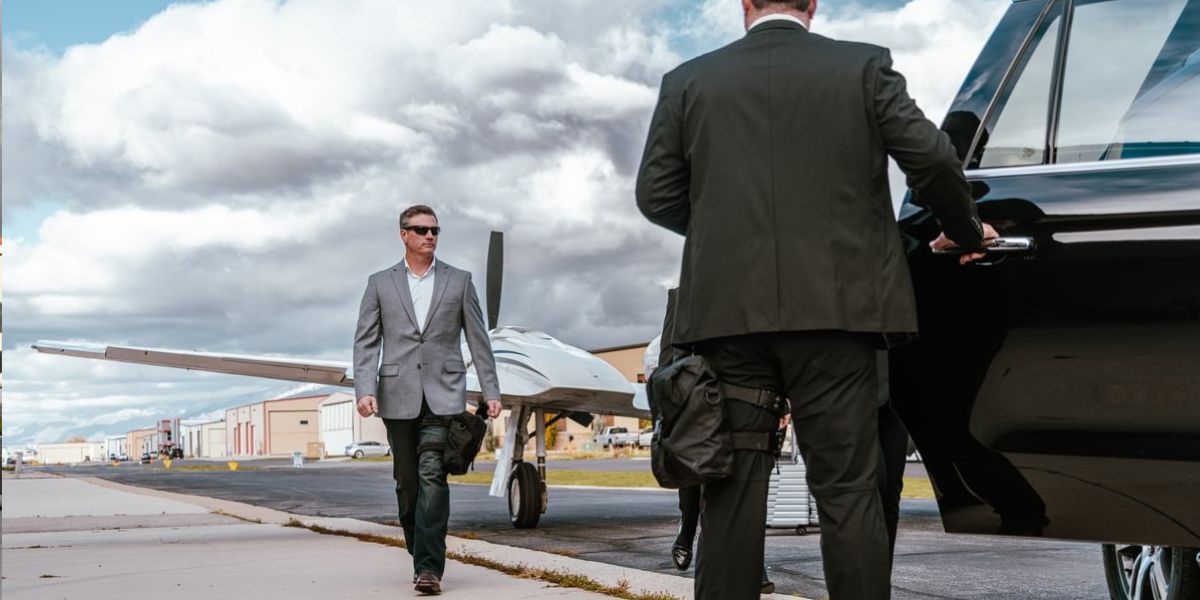
Situational awareness is the habit of noticing what is happening around you, understanding what it means and predicting what is likely to happen next. For personal safety, it means spotting the warning signs of a threat early enough to avoid it, leave or prepare, instead of reacting after it has already started.
After two decades with the NYPD, I can tell you that most people who become victims never saw it coming, and most of the warning signs were there. Situational awareness isn't paranoia, and it isn't a special skill reserved for police officers or soldiers. It's a habit anyone can build, and it's the foundation of every good personal safety plan.
What Is Situational Awareness? The Cooper Color Code: Levels of Situational Awareness How to Spot Threats: Baselines and Warning Signs How to Improve Situational Awareness: Daily Habits Situational Awareness at Home From Awareness to Action: Tactical Situational Awareness Recommended Training Frequently Asked QuestionsTable of Contents
Key Takeaways
-
Situational awareness has three parts: noticing what's around you, understanding what it means and predicting what happens next.
-
The Cooper Color Code gives you a simple way to set your level of alertness. Most of the time, you want to be in Condition Yellow: relaxed but aware.
-
Threats are spotted by learning the normal "baseline" of a place and noticing what doesn't fit.
-
Small daily habits, like keeping your phone down in transit areas and knowing your exits, make a bigger difference than any gadget.
-
Awareness only helps if you act on it. Decide in advance what you'll do when something feels wrong.
What Is Situational Awareness?
Situational awareness means knowing what is going on around you well enough to make good decisions about it. The most widely used situational awareness definition comes from human factors researcher Mica Endsley, who described it as three levels that build on each other.
 Image source: MIRA Safety®
-
-
Perception. Noticing the people, objects, sounds and movement in your environment.
-
Comprehension. Understanding what those details mean. A man pacing near an ATM means something different than a man pacing outside a hospital waiting room.
-
Projection. Predicting what is likely to happen next, so you can act before it does.
-
The meaning of situational awareness is the same whether you're a pilot, a firefighter or a parent walking to the car after dinner. You're constantly asking: What's around me? What does it mean? What happens next? Most people stop at the first level, if they get there at all. Personal safety depends on reaching the third.
The Cooper Color Code: Levels of Situational Awareness

The Cooper Color Code is a simple scale for matching your level of alertness to your surroundings. It was created by Marine Corps officer and firearms instructor Jeff Cooper, and it's still taught in law enforcement and self-defense training because it's easy to remember under stress.
|
Condition |
Mental State |
What It Looks Like |
|
White |
Unaware and unprepared |
Head down in a phone, earbuds in, lost in thought. If something happens, your first reaction is "This can't be happening." |
|
Yellow |
Relaxed alert |
Calm, but you're scanning the room, noticing who comes and goes and knowing where the exits are. No specific threat, but you know one is possible. |
|
Orange |
Specific alert |
Something has caught your attention. You're watching a person or situation and forming a plan: "If he does X, I'll do Y." |
|
Red |
Action |
The trigger you set in Orange has happened. You act on your plan: leave, create distance, call for help or defend yourself. |
The goal isn't to live in Orange or Red. That's exhausting and unsustainable. The goal is to spend your time in public in Condition Yellow, which lets you move up quickly when something changes. Condition White belongs at home with the doors locked, not in a parking garage at night.
How to Spot Threats: Baselines and Warning Signs
You spot threats by learning what "normal" looks like in a place and noticing what doesn't fit. In training, we call normal the baseline, and anything that breaks it an anomaly.

Image source: MIRA Safety®
Every environment has its own baseline behavior. In a coffee shop, people are relaxed, focused on their drinks or laptops and not paying much attention to strangers. On a subway platform at rush hour, people move quickly and avoid eye contact. Once you know the baseline, anomalies stand out: the person who isn't doing what everyone else is doing, or the thing that should be happening but isn't.
These are some of the most common pre-attack indicators and warning signs. One alone doesn't mean danger, but two or three together should move you to Condition Orange.
-
Someone watching people instead of the activity everyone else is focused on
-
"Target glancing": repeated looks at a person, a bag, an exit or a police officer
-
Clothing that doesn't fit the weather or setting, like a heavy coat on a warm day
-
Hands hidden, or one hand repeatedly touching the waistband or a pocket
-
Someone changing direction or speed to match yours, or appearing in more than one place you go
-
An approach from an angle, or two people splitting up to come at you from different sides
-
A sudden change in the crowd: people going quiet, moving away from an area or looking in the same direction
-
Pacing, sweating, clenched fists or a "thousand-yard stare" that doesn't match the setting
-
A stranger who keeps trying to close distance or distract you with questions
-
Your own gut telling you something is wrong, even if you can't explain why. This is often referred to as "The Gift of Fear".
That last one matters. Your brain processes far more than you're consciously aware of. When something feels off, don't talk yourself out of it. Treat it as information and give the situation a second look.
How to Improve Situational Awareness: Daily Habits
The fastest way to improve situational awareness is to build a few simple habits until you do them without thinking. You don't need special equipment, just practice.

Image source: Pexels
These situational awareness tips are the ones I've seen make the biggest difference for civilians:
-
Put the phone away in transition zones. Parking lots, garages, building entrances, transit stops and ATMs are where people are most vulnerable and least aware. Finish your call or text before you get there.
-
Know your exits. When you walk into a restaurant, theater or store, note two ways out. It takes three seconds and becomes automatic. If you were forced to leave through a different way than you came in, where is that?
-
Sit where you can see the door. In a restaurant or waiting room, choose a seat facing the entrance with a wall behind you when you can.
-
Keep one ear free. Headphones block one of your best early warning systems. If you wear them, keep the volume low or use one earbud.
-
Play "what if." In any new place, ask yourself: What would I do if there were a fire? A fight? A gunshot? Running through it in advance cuts your reaction time when it matters.
-
Vary your routine. Predictable routes and schedules make you easier to target. Small changes go a long way.
If you want to be more aware of your surroundings, practice deliberately. One of the best situational awareness exercises is Kim's Game, a memory drill used in military and scout training. Have someone place 10 to 15 small objects on a table, study them for 60 seconds, cover them and then list as many as you can. You can practice the same skill anywhere: after leaving a store, try to recall the color of the cashier's shirt, how many people were in line and where the exits were. Over time, your awareness of surroundings sharpens without extra effort.
Situational Awareness at Home
Security situational awareness doesn't stop at your front door. Most home burglaries and break-ins are preceded by some kind of surveillance, and the signs are often visible to neighbors who know what to look for.
-
Unfamiliar vehicles parked on your street repeatedly, especially with someone sitting inside
-
Door-to-door "salespeople" or "surveyors" who seem more interested in your house than their pitch
-
Knocks on the door with no one there, or someone asking for a person who doesn't live there (a common way to check whether a home is occupied)
-
Flyers or small markers left in doors or gates that disappear when the home is occupied
-
Someone photographing homes, cars or entry points
Awareness at home works best alongside a plan: knowing your home's weak points, building layers of protection and making sure everyone in the family knows what to do. That's the focus of MIRA Safety's home security plan course, which walks you through assessing your property, fixing the most common vulnerabilities and building layered protection.
From Awareness to Action: Tactical Situational Awareness

Image source: MIRA Safety®
Awareness only protects you if it leads to a decision. Tactical situational awareness means connecting what you notice to what you'll do about it, before you're under stress.
Military and law enforcement trainers use the OODA loop to describe this process: Observe, Orient, Decide, Act. Situational awareness powers the first two steps. The faster you observe and orient, the more time you have to decide and act, and the more options you have, like crossing the street, walking back into a store, getting into a well-lit area or calling 911.
In most situations, the right action isn't confrontation. It's distance. The best outcome of good situational awareness is the fight that never happens because you weren't there for it. If you see something suspicious that could threaten others, report it to local law enforcement. The Department of Homeland Security's "If You See Something, Say Something" campaign lists the behaviors worth reporting.
Recommended Training
Reading about situational awareness is a start. Building it into a plan is what keeps you and your family safe. MIRA Safety's online courses turn these principles into a step-by-step plan you can use right away.

-
Build Your Personal Protection Plan. Situational awareness training for everyday life: how to identify possible dangers, stay aware of your environment and make sound decisions to avoid risk before a situation escalates. The right fit if you commute, travel or spend time in crowded public places. Build your personal protection plan online at your own pace.
-
Create a Home Security Plan. Takes the same mindset home: evaluate your property, address the most frequent vulnerabilities and build several protective layers. The right fit for homeowners, renters and families who want a clear plan instead of guesswork.
Frequently Asked Questions
Sources
-
Endsley, M. R. (1995). Toward a Theory of Situation Awareness in Dynamic Systems. Human Factors, 37(1), 32–64.
-
U.S. Department of Homeland Security. If You See Something, Say Something®.
-
Cooper, J. Principles of Personal Defense. Paladin Press.
-
Boyd, J. R. The OODA loop, as described in What Is the OODA Loop? (MIRA Safety).
About the author

Leave a comment