


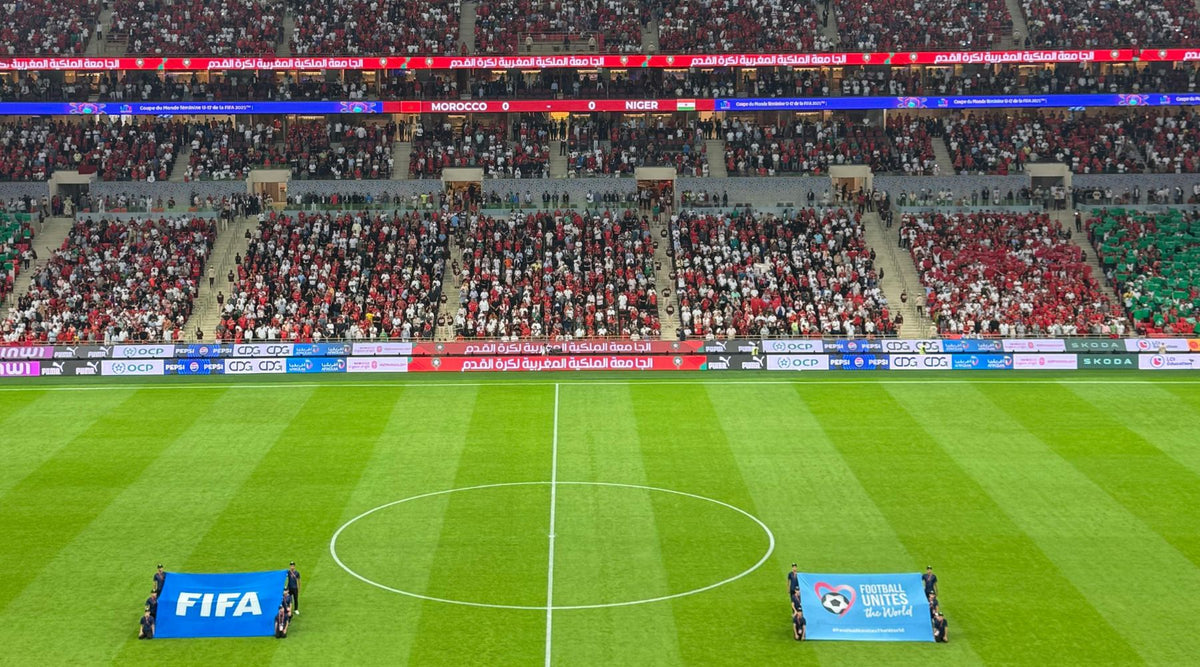
Planning to attend the 2026 FIFA World Cup, or just find yourself in a host city this summer? This guide breaks down the security landscape across North America's 26 host cities, the threats that actually matter, and the specific steps that give you an edge in the first few minutes of any emergency.
How Big Is the 2026 FIFA World Cup Compared to Other Events? Why Are Certain Host Cities Like Philadelphia and New York Especially Complicated? What Are the Real Security Threats at the 2026 World Cup? What Should You Know About Chemical Exposure Risks at Large Outdoor Events? What Happens in the First Five Minutes of a Crowd Emergency? What Mistakes Do People Make at Large Events That Put Them at Risk? How Can You Actually Stay Safe at the 2026 World Cup?Table of Contents
Key takeaways:
- The 2026 World Cup is the largest sustained mass-gathering event ever held in North America: 26 cities, 3 countries, 6 weeks
- Fan zones and transit corridors carry more risk than stadiums, and you don't need a ticket to be in one
- The most likely threats aren't dramatic: they're crowd surges, severe weather, and soft-target incidents in public spaces
- In any crowd emergency, panic causes more casualties than the initial trigger
- The people who get out safely move before the crowd, not with it
- Practical preparation is simple: know your exits, stay at the edges, and keep one emergency bag accessible
Author's note: This is based on publicly available reporting and patterns from past events. The point here is not fear. It is awareness, and the ability to act in the few minutes that actually decide outcomes.
How Big Is the 2026 FIFA World Cup Compared to Other Events?

Image Source: Pexels
Picture the Super Bowl. Now picture it happening every single day, for six straight weeks, in 26 cities, across three countries at once.
That is the 2026 FIFA World Cup. And almost nobody outside of law enforcement and emergency management is thinking about it that way.
Most people are looking at the games. The people who run security for a living are looking at what happens around the games, because that is where the math gets ugly.
On top of that, there has been public discussion about restructuring the specialized NYPD units that handle large-scale event security, and the city has signaled it may limit approval of certain new large public events during the tournament window if agencies decide they cannot safely staff them. That is not a ban. It is a resource decision. And cities do not start rationing event permits unless they already expect to run thin.
That tells you something. The people closest to the planning are bracing for saturation.
In the United States, soccer does not carry the weight of football or baseball. That cultural blind spot is the first problem, because it makes people think of this as a series of matches instead of what it actually is: the largest sustained mass-gathering event ever staged on this continent.
Daily international crowds. Fan bases moving city to city for weeks. High emotion, every night, in every host market.
And here is the part most fans miss. You do not need a ticket to be standing in a high-risk environment. If a match is not in your city, there is a fan zone. Philadelphia, New York, and others will pack public squares with thousands of people watching games happening somewhere else.
The crowd does not stay at the stadium. The crowd comes to you.
Why Are Certain Host Cities Like Philadelphia and New York Especially Complicated?

Image Source: Pexels
Two examples show how fast this compounds.
Philadelphia hosts a World Cup match on July 4th. The same July 4th that is also the 250th anniversary of the country. So in one city, on one day, you get a match, a major fan zone, full-scale Independence Day celebrations, a tourism surge, and normal big-city congestion. That is not one event. That is four high-density events sharing the same streets.
New York is its own kind of complicated. Multiple fan zones across the city, matches at MetLife Stadium roughly six miles into New Jersey, and a constant transit flow pushing people across a state line all day. That means cross-state coordination, multiple crowd concentration points, and a transit corridor that has to hold.
What Are the Real Security Threats at the 2026 World Cup?

Image Source: Pexels
Forget the movie version. The real risk picture is more boring and more dangerous than what most people imagine.
Soft target attacks. The most realistic threat is not inside a hardened stadium. It is the fan zone, the bar, the transit hub, the hotel block. Crowds gather, security spreads thin, and the gap opens. We have seen this pattern before, from the 2015 Paris attacks to the Westgate mall siege. The target is rarely the fortress. It is the crowd standing outside it.
Crowd surge and panic. This is one of the most likely things that can go wrong, and it does not require a bad actor at all. Astroworld killed ten people in 2021. The Who concert in 1979 killed eleven. A minor trigger in a packed space, poor crowd flow, one blocked exit, and a celebration turns into a crush in seconds.
Weather and infrastructure. This is the one almost nobody plans for, and it may be the most likely of all. The tournament runs through peak summer storm season in the Northeast. In July 2025, almost exactly a year before kickoff, flooding shut down New York subway stations and stranded commuters in minutes. Heavy rain floods tunnels, stops trains, jams entrances, and forces big groups into tight spaces. Once movement stops, risk stacks. Not every high-impact event is intentional. A thunderstorm at the wrong moment can create the same confusion and bottlenecks as an attack.
Drones. Cheap, everywhere, and evolving fast. The NYPD has rolled out drone detection and is testing mobile counter-drone vehicles, which is real progress. But detection is not the same as protection. A drone still has to be spotted, identified, and engaged, and in a crowded environment those seconds matter. The gap between detection and action is where the risk lives.
What Should You Know About Chemical Exposure Risks at Large Outdoor Events?

Here is where I stop being a general observer, because chemical exposure is the corner of this I have spent real time on.
Not every chemical threat is a man in a movie with a canister. The common versions are quieter. An industrial release near a transit hub. Smoke from a structure fire pushed into a packed square. Riot control agents deployed into a dense crowd to break it up, which in a fan zone of thousands is its own kind of disaster.
Here is what ties all of it together, and it is the thing people get wrong. In a chemical or gas event in a dense crowd, the chemical itself is rarely what does the most damage. The panic does. People can't see, can't breathe well, can't think, and they all try to move at once. The exposure starts it. The crush finishes it.
That is the bridge between every threat on this list. They all end the same way, with a few thousand people trying to move through an exit built for a few hundred.
So the honest question is not whether the city has counter-drone trucks. It is whether you, standing in that crowd, can still see and move when the people around you can't.
If your plan for tear gas, smoke, or an industrial release is pulling your shirt over your face, that is not a plan. A compact escape hood or respirator does not make anyone invincible, and I would never sell it that way. What it buys is a clear airway and clear eyes for the minutes it takes to get out of the pinch point while everyone else is reacting to the burn. In a crowd, those minutes are the whole game.
Be realistic about where you keep it. You are not getting a respirator past stadium security and a clear-bag policy, so this is not a gameday-seat item. It lives in your car, your hotel room, or your day bag for the fan zone. Which is the point, because the fan zones, the transit hubs, and the long walk in and out are where you actually spend most of your day, and where coverage runs thinnest. MIRA's escape hoods and respirators are built for that grab-and-go scenario, and the filters are the part that actually matters in a chemical or particulate event. You do not need to show up kitted out like a SWAT officer. You need one thing within reach that lets you keep your head when the air goes bad.
What Happens in the First Five Minutes of a Crowd Emergency?
Whether it is a surge, a storm, a vehicle incident, or something deliberate, the first few minutes set the outcome.
People love the frameworks. Run, Hide, Fight. Avoid, Deny, Defend. They all point at the same truth, which is that recognizing what is happening early and moving decisively matters far more than which acronym you memorized.
These are not checklists. In a real crowd, conditions change every few seconds. A blocked exit, a sudden surge, a downpour flooding the entrance. The people who come out of these situations clean are not following step one then step two. They are reading the room and moving ahead of the crowd, not with it.
What Mistakes Do People Make at Large Events That Put Them at Risk?

Image Source: Pexels
Four habits get people hurt. They wait for instructions. They assume security will handle everything. They miss the early warning signs. And they stay too long.
Security is built to respond. It cannot be everywhere at once, and across 26 cities for six weeks it will be stretched thinner than at any event in memory. Most of the resources will sit on stadiums and the biggest fan zones. That leaves transit, hotels, and tourist corridors with lighter coverage. If anything more complex unfolds, the Mumbai 2008 or Nairobi multi-site model, agencies are suddenly forced to choose where to send people and what to let wait.
You do not want to be the thing that waits.
How Can You Actually Stay Safe at the 2026 World Cup?

Image Source: Pexels
None of this is complicated. It is deliberate.
Find your exits the moment you arrive, not when you need them. Stay toward the edges of a crowd, not the dead center. Move early, not late. Watch behavior, not just events. Have a simple plan, and keep one bag in the car that covers air, water, and getting out. That is it.
Every host city is experienced. Every agency is preparing. The systems will be strong. But no system is perfect, and at this scale, across this many places, for this long, there will always be an element of the unpredictable.
The goal was never fear. It is awareness, and the ability to act in the few minutes that decide everything.
In most crowd disasters, the threat is not what starts the problem. It is what happens when everyone tries to move at once. Be one of the people who is already moving.
Frequently Asked Questions
About the author

Leave a comment