


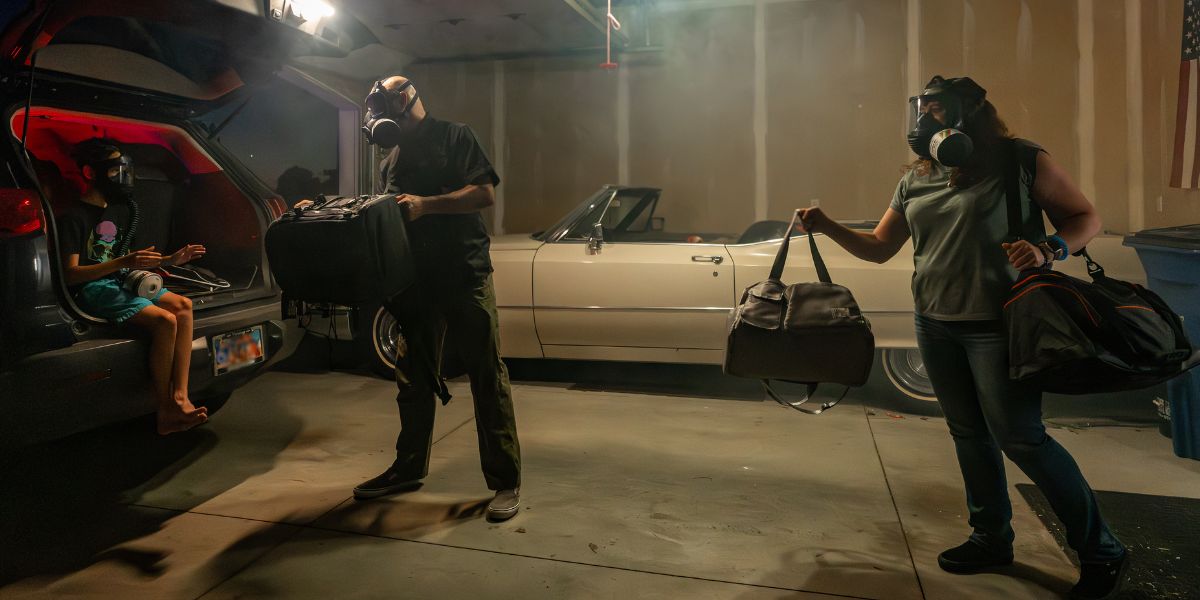
How to prepare for a wildfire comes down to four steps: build an evacuation plan that puts people and pets first, pack a wildfire go bag before fire season, harden your home against embers, and protect your family from smoke. Do all four before the first sign of smoke, because evacuation orders can skip straight to Go Now.
Recent fires, like the Spokane wildfire, have shown that families do not always get a Level 1 "Ready" or Level 2 "Set" warning before a Level 3 "Go Now" order. Start by checking how a fire could affect your area with our Wildfire Simulator then work through the checklists below with your family. For what to do once a fire reaches you, read our guide on how to survive a wildfire.
How to Prepare Your Family for a Wildfire Evacuation Wildfire Evacuation Levels: What to Do at Each Stage Wildfire Go Bag Checklist How to Prepare Your House for a Wildfire How to Protect Your Family From Wildfire Smoke Recommended Wildfire Preparedness GearTable of Contents
Key Takeaways
-
Plan for people first, then pets, then documents and medication. Everything else can be replaced.
-
Stay one level ahead of official warnings: leave at Level 2 "Set" instead of waiting for Level 3 "Go Now."
-
Pack a wildfire go bag now with documents, medication, chargers, clothes, water and respiratory protection.
-
Clear the first 5 feet around your home of anything that can burn, and cover vents with 1/8-inch metal mesh to keep embers out.
-
Wildfire smoke can travel hundreds of miles, so wildfire preparedness includes a HEPA air purifier and well-fitted N95 masks at home.
How to Prepare Your Family for a Wildfire Evacuation

Image source: Pexels
A wildfire evacuation plan puts people first, pets second and belongings last, and every person in the house knows their job before smoke appears. Practice your wildfire emergency preparedness plan at least once a year, before fire season starts.
If you live alone, evacuating is fairly simple. Most families do not have that luxury. Spouses, kids, grandparents and pets may all be in harm's way and looking to you for direction. At the first sign of smoke, your family should start talking through a plan you have already practiced, not making one up.
Plan Around Normalcy Bias and Optimism Bias
Normalcy bias and optimism bias are the two mental traps that delay evacuations, and both can prove fatal during a wildfire. Normalcy bias tells you the worst past event is the limit of what can happen. If fires have popped up near your area before and never threatened your home, that becomes the baseline you judge the current fire against. Optimism bias admits wildfires are dangerous but assumes they happen to other people. Either one leads you to delay leaving and delay preparing your home.
The fix is to set concrete milestones and follow them no matter how you feel. When you see the first sign of smoke, you take full accountability for the people and pets you love. You do not have to do anything physical yet, but you start taking a mental inventory.
Then train your family to stay one step ahead of the evacuation warnings. When everyone else is getting ready at Level 1, you are getting set. When everyone else is set and waiting for the order to go, you are already on the move. It does not have to be dramatic. Take the family to a movie, out for ice cream or on a drive during a Level 2 warning. If nothing happens, you had a fun afternoon and went home. If the fire spreads, you avoided the gridlock. Your brain will tell you that you are being too cautious, and your spouse may agree. Follow the plan anyway and settle the argument later.
How to Prepare Children for a Wildfire Evacuation
Give every child a role that fits their age, and secure the youngest first so you can focus on everything else. The older they are, the more they can help.
Most newborns sleep well in a car seat, and many parents carry the seat inside so the baby can finish a nap. If you think a Go Now order is possible, put the baby in the car seat while you gather everything else. You can grab the seat and leave while the baby stays comfortable.
Keep younger children who can walk in one central room where you can see them. Hand over the iPad if you need to. What matters is knowing where they are while you move around the house. Older elementary children can grab one comfort item they would miss if the house were lost. Teens should have preassigned tasks, like getting the pet carrier from the garage and securing the cat.
All of this should happen well before a Level 3 order. Ideally you are ready to leave by Level 2. If a Level 3 order comes without warning, get everyone in the car and do not spend time looking for stuffed animals or tablets. Human lives come first, then pets. Asking a child to leave a pet behind is hard, which is why you put the cat in its carrier at the first sign of smoke instead of chasing it at the last minute.
Planning for a Wildfire Evacuation When You Are Not Home
If your children may be home without you, they need a simple plan they can follow on their own: get out, go to a set meeting point and call you. Even if you only drove across town for 20 minutes, roadblocks and traffic may keep you from getting back into the evacuation zone.
Keep their plan short. It is not their job to search drawers for birth certificates. If those documents were not packed ahead of time, consider them lost. A child's only job is to get themselves out safely. They can bring a pet only if it is already leashed or in its carrier. Remember that they probably will not have a car. Agree ahead of time on a trusted neighbor or a meeting point they can walk to by a route that leads away from likely fire paths, and make sure they know to call 911 if they see flames or heavy smoke close by.
Early warning matters most when kids are home alone. Sign up for your county's emergency alerts and install the Watch Duty app, a free nonprofit wildfire alert service with real-time updates. If you live anywhere near wildfire country, it is a must. If a fire starts nearby, end the errand and head home. If a fire is moving toward your children, tell them to leave now and meet you at the meeting point.
Wildfire Evacuation Levels: What to Do at Each Stage

Most U.S. communities use three wildfire evacuation levels based on the national Ready, Set, Go! program: Level 1 means be ready, Level 2 means be set to leave at a moment's notice, and Level 3 means leave now. Names and criteria vary by county, so check how your local emergency management agency defines its wildfire evacuation zones.
While you should plan for a Go Now order with no warning, many fires do give advance notice. Use this wildfire evacuation checklist to decide what to do at each stage.
|
Level |
What it means |
What to do |
|---|---|---|
|
First sign of smoke (unofficial) |
A fire has been reported near you |
Check Watch Duty and local alerts. Locate every family member and pet. Cancel plans that would take you far from home. |
|
Level 1: Ready |
A fire is in the area. Be aware and prepare. |
Finish your go bag. Stage medication and documents by the door. Pull out pet carriers. Fill the gas tank and back the car into the driveway. |
|
Level 2: Set |
Significant danger. Be ready to leave at a moment's notice. |
Load the car. Put pets in carriers. Close windows and doors, close the garage and disconnect the automatic opener. Then leave. This is your Go Now moment. |
|
Level 3: Go Now |
Danger is current or imminent. Leave immediately. |
Take people and pets and go. Follow the routes officials give you. Do not go back for belongings. |
First sign of smoke. This is not an official level, but it is the time to run through the plan in your head. How quickly could you grab the pets? Where are the kids? Should you cancel plans and stay close to home?
Level 1: Ready. This is where action starts. If your go bag is not fully packed, finish it now. Take medication out of the cabinet and documents out of the safe and stage them by the door. Pull out the pet carriers and find the pets. With any extra time, gather electronics, comfort items and anything else that would make life easier if the house were lost.
Level 2: Set. Load the car if you have not already. Pets are in their carriers and the whole family is moving items to the car. Close the garage and pull the release cord on the automatic opener so you can open it by hand if the power goes out. Once you have what you need, leave. Go across town, see a movie or get ice cream. If all is well, you head home after an afternoon out with your family.
Level 3: Go Now. If you have not left, leave now. You are a bit late, but better late than never. Every one of your neighbors just got the same order, so expect traffic on every evacuation route. In some fires there is no Level 1 or Level 2 at all, and the order jumps straight to Level 3. Families who leave early get out in minutes, while those who wait for the order can spend hours in gridlock with smoke on both sides of the road. If you made no preparations, this is the people-and-pets-only phase. Do exactly what the order says and go.
Wildfire Go Bag Checklist

Image source: MIRA Safety®
A wildfire go bag holds what you need to get out safely and restart your life afterward: documents, medication, chargers, a change of clothes, food and water for 24 to 72 hours, and respiratory protection. Pack it before fire season and keep it near the door. This is the core of any wildfire preparedness checklist.
This is not a zombie apocalypse bug-out bag with enough gear to live off the land. It is a bag your kids could grab on the way out the door that makes life easier on the other side of a wildfire. Pack by what each item does for the people in your family, not by what it costs. Prescription medication comes before a laptop.
Respiratory protection belongs in every wildfire go bag. Our Wildfire and House Fire Emergency Kit is built for this and straps to the outside of a go bag or to your leg, which leaves more room inside. If you do not have a kit, pack a respirator with a filter rated for smoke, plus N95 masks for each family member.
-
Essential documents: birth certificates, marriage license, passports, wills and trust information
-
Prescription medication, medical records and vaccination records for people and pets
-
Computer backups, a password list and any hardware crypto wallets
-
Some cash, credit cards and key financial documents
-
Phone chargers, a car charger and a battery pack
-
Family photos and sentimental items that cannot be replaced
-
Toiletries and at least one change of clothes for everyone
-
Nonperishable food and water for at least 24 hours, 72 hours if there is room
-
Respiratory protection: a smoke-rated respirator kit or N95 masks for each person
-
Pet food, leashes, carriers and a copy of pet records
-
Flashlight, spare glasses and a printed list of emergency contacts
The purpose of a wildfire go bag is to get you out of the evacuation zone safely and get you back to normal faster. The National Interagency Fire Center tracks thousands of wildfires a year, and they reach suburbs as well as rural areas. Planning for the threat you are most likely to face is prepping 101.
How to Prepare Your House for a Wildfire

To prepare your home for a wildfire, create defensible space by managing the vegetation around your house, and harden the house itself so embers have nothing to ignite. Wind-blown embers, not the main wall of flame, cause most home ignitions.
If you have ever driven through a neighborhood after a wildfire, you have seen how random the damage looks. Three homes are gone, two are untouched, then three more are gone. Part of that is luck, but much of it comes down to what the embers found when they landed. You do not have to rely on luck to save your home.
Create Defensible Space Around Your Home
Defensible space is the buffer between your house and the plants, grass and trees around it. CAL FIRE and NFPA Firewise divide it into three zones:
|
Zone |
Distance from home |
What to do |
|---|---|---|
|
Zone 0 (ember-resistant zone) |
0 to 5 feet |
Nothing that burns: replace bark mulch with gravel or pavers, remove plants and dead leaves, move firewood and wood furniture away. |
|
Zone 1 (lean, clean and green) |
5 to 30 feet |
Keep grass green and watered. Space shrubs apart. Prune tree branches 6 to 10 feet off the ground and keep them at least 10 feet from the roof and chimney. |
|
Zone 2 (reduced fuel) |
30 to 100 feet |
Mow grass to 4 inches or less. Space trees and shrubs to break up continuous fuel. Remove dead plants and fallen branches. |
Fire resistant landscaping does not mean a concrete yard, but a little advance planning goes a long way. In a crowded subdivision, keeping your grass green is more about protecting your home than impressing the neighbors. Spread out trees and shrubs so they do not form clumps of fuel, and prune lower branches so fire cannot climb from the ground into the canopy. The trees you plant matter too. Many conifers catch fire easily, which is a problem in the Northwest, so check a list of fire-resistant trees before you plant.
Wildfire Mitigation Checklist for Your Home
Wind carries embers far ahead of a fire, which is why a fire can skip one house and ignite the next. This checklist covers the places embers most often catch:
-
Clean leaves and pine needles off the roof and out of the gutters regularly.
-
Cover attic, soffit and crawl space openings with ember-resistant vents or 1/8-inch metal mesh.
-
Install a spark arrestor on the chimney and any stovepipe.
-
Move firewood, lumber and other fuel at least 30 feet from the house.
-
Keep propane tanks outdoors with at least 10 feet of cleared space around them.
-
Replace wood fencing or gates that attach to the house with metal or masonry for the first 5 feet.
-
When a fire is nearby, bring in patio cushions, doormats and trash cans.
Maintaining the outside of your home keeps the neighbors happy most of the year, and it may be what saves your house when it matters most.
How to Protect Your Family From Wildfire Smoke

Image source: MIRA Safety®
Protect your family from wildfire smoke by staying indoors with the windows closed, running a HEPA air purifier in one "clean room," and wearing a well-fitted N95 or P100 respirator if you have to go outside. Check the Air Quality Index at AirNow.gov: above 150 is unhealthy for everyone.
Smoke reaches far more people than flames do. It can drift hundreds of miles and settle over a city for days. The main health threat is fine particulate matter (PM2.5), which is small enough to reach deep into the lungs. Children, older adults, pregnant women and people with heart or lung conditions are most at risk.
Choosing an Air Purifier for Wildfire Smoke
The best air purifier for wildfire smoke uses a true HEPA filter and is sized for the room it runs in. Check the clean air delivery rate (CADR) for smoke against the room's square footage. Set up one clean room, usually a bedroom, keep the door closed and run the purifier there. If your home has central air, set it to recirculate and use the highest-rated filter your system can handle.
Do Masks Help With Wildfire Smoke?
The right mask helps, but cloth and surgical masks do not. An N95 mask for wildfire smoke filters at least 95% of airborne particles when it seals against the face; facial hair breaks that seal. N95 and P100 masks only filter particles. They do not stop carbon monoxide or other gases from burning homes and vehicles. If you may be close to the fire or to burning structures during an escape, a full-face respirator with the VK-530 smoke and carbon monoxide filter covers both. It is built for escape, not for fighting fires.
Recommended Wildfire Preparedness Gear
The gear that matters most for wildfire preparedness is the gear that protects your breathing during an evacuation and while smoke lingers afterward.
-
Wildfire and House Fire Emergency Kit: A ready-made escape kit with respiratory protection that straps to a go bag or your leg. It is the fastest way to add smoke protection to a family's go bags.

Image source: MIRA Safety®
-
VK-530 smoke and carbon monoxide filter: Rated for smoke and carbon monoxide, which particulate masks do not stop. Keep one per person if you already own a compatible mask.
-
Full-face gas masks: Pair with the VK-530 for eye and face protection as well as breathing protection when smoke is heavy.
- N95 masks and a HEPA air purifier: For the days or weeks of smoke after the fire, when you are home but the air outside is unhealthy.
Frequently Asked Questions
Sources
-
CAL FIRE, Ready for Wildfire: Defensible Space, Home Hardening and Evacuation Checklist. readyforwildfire.org
-
NFPA Firewise USA: How to Prepare Your Home for Wildfires. nfpa.org/firewise
-
International Association of Fire Chiefs, Ready, Set, Go! Program. wildlandfirersg.org
-
Ready.gov: Wildfires. ready.gov/wildfires
-
U.S. EPA and AirNow: Wildfire Smoke and Air Quality Index. airnow.gov
-
National Interagency Fire Center: National Fire News. nifc.gov
-
National Interagency Fire Center: Wildfire Mitigation for Your Home. nifc.gov
-
Oregon State University Extension: Fire-Resistant Plant Profiles, Trees. extension.oregonstate.edu
-
Fire Adapted Colorado: Blinded by Bias. fireadaptedco.org
-
Watch Duty. watchduty.org
About the author

Leave a comment