
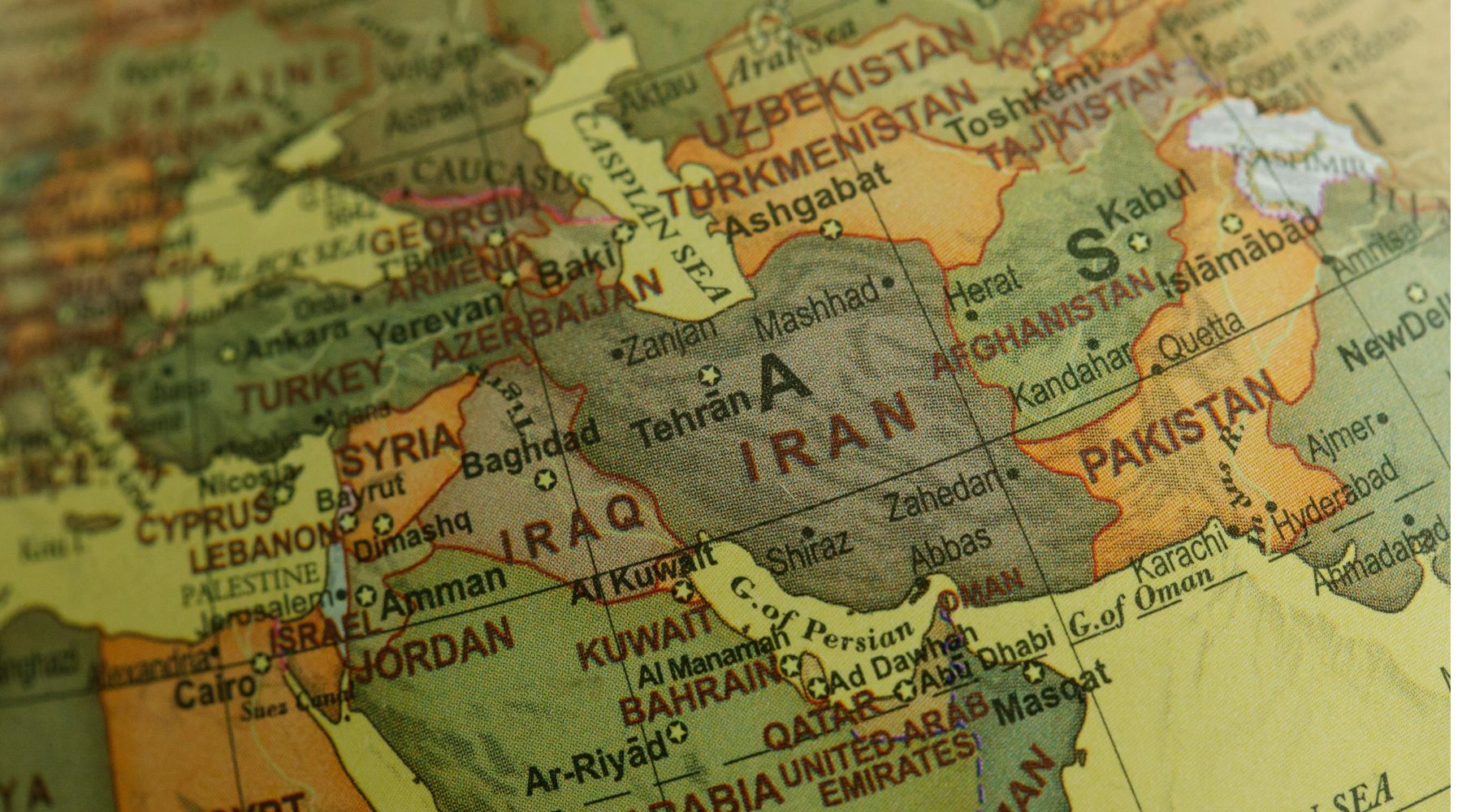
Like most Americans, we woke to the news and reports that armed conflict with Iran had begun. It is no doubt the case that some Americans support this, while others oppose it. Here at MIRA Safety, our goal with this article is simply to help you understand the conflict and how to prepare for the possible repercussions.
As a Marine veteran who served in Iraq, I have seen the complexities of conflict in the Middle East first hand. While U.S. and Israeli military superiority is unmatched in the region, the outcome of this conflict will be determined by the people of Iran. Like Iraq, the Iranian people are not a homogenous group. There are competing interests mixed in with tribal and ethnic loyalties. For the average American family, you see the war from afar, but never forget the need to prepare at home. We’re here to help to that end in any way possible.
Introduction: What the Attack on Iran Means for the Prepared American Civilian Recent U.S. Military Action Against Iran and Regional Implications What Is a Supreme Leader and How Does Ayatollah Ali Khamenei’s Death Factor In Increased Vigilance at Home Is the Proper Domestic Response Keep Your Survival Supplies Mobile and Within Arm’s Reach Long-Term Implications of the Conflict with Iran How the Rest of the World Will Respond to American Military Action in Iran Conflict in Iran Will Take a Toll on the U.S. Military Conclusion: Supporting Military Families and Monitoring DevelopmentsTable of Contents
Recent U.S. Military Action Against Iran and Regional Implications

Image Source: Pexels
Rather than retrace the origins of the conflict, which would involve a detailed history lesson dating back to World War 2 and a 1953 coup, we’re going to just acknowledge that military action has arrived. In addition, we want to acknowledge that information is still coming in real time and the fog of war means there is likely a great deal of misinformation floating about as fact. Here’s what we know so far.
The strikes in Iran began with a daylight missile attack in the heart of Tehran. It is unclear at this point which strikes were Israeli or American, but missiles started raining down when Iran least expected it. Targets appear to have included Supreme Leader Ayatollah Ali Khamenei, the Iranian Parliament, Iranian President, and key figures in military leadership. The apparent objective was to disrupt senior leadership and degrade command-and-control capabilities rather than simply conduct a symbolic strike.
In response, the Iranians have fired drones, short range, and long range ballistic missiles. Explosions have been reported in Israel, Saudi Arabia, Dubai, U.A.E., Qatar, Kuwait and Bahrain. While missile defenses have been largely successful,some missiles are getting through and targets are being struck. Various videos are circulating online showing a direct hit on the U.S. 5th Fleet HQ in Bahrain. Casualties on either side are unknown at this point, but what remains clear is that both the United States, Israel, and the Iranian regime are ready for a protracted fight. That’s where we stand at the moment and now, let’s talk about the implications.
What is a Supreme Leader and How Does Ayatollah Ali Khamenei’s Death Factor

Image Source: Pexels
The first, and perhaps the most significant early development, is the revelation that Ayatollah Ali Khamenei was killed during the first strikes. This matters greatly to the Islamic Republic of Iran. It is a theological position of the highest importance with practical political ramifications. The Supreme Leader is the senior Islamic jurist in Iran and guides both the religious and political life of the nation. He sits above the President and Parliament of Iran with theological oversight.
Now that he has been killed during the initial strikes, the position is vacant and it will require a meeting of the other highest Islamic jurists to replace him. One can think of it like replacing the Pope and yet, gathering all of the other highest Islamic jurists in one room during this stage of the conflict would be a poor decision. The path of the Iranian Republic now falls to whatever power structure remains in place.
The Iranian Revolutionary Guard Corps (IRGC) reported directly to him and they are likely the highest authoritative body that will lead Iran through the rest of this conflict. What members of the Iranian Parliament, President, or full body of the rest of the Islamic jurists known as the Assembly of experts remains is still to be seen. Those in a position of strength are most likely to take the helm during this transition and few know what to expect next.
Increased Vigilance at Home is the Proper Domestic Response

Image Source: MIRA Safety ®
In the wake of 9-11, there was a heightened sense of vigilance when it came to Islamic terrorism. Airports would never be the same and the phrase, “if you see something, say something” became a normal part of American culture. After 9-11, there were roughly six terror attacks on U.S. soil that one could link to groups like ISIS or Al Qaeda. In most cases they were people already in the United States who pledged their loyalty to one of those groups.
The lack of broad success by the Islamic terrorist groups has lulled many in the United States into a sense of complacency. This is commonplace, even among trained military forces. I can remember sitting on post in Iraq with utmost vigilance when I first arrived. After six months without a single attack, Marines are reading books and playing cards on post. Unfortunately, complacency kills.
Many strategists believe that one of the Iranian counter-responses to any U.S. attack could be to unleash sleeper agents on American soil. These agents wouldn’t achieve any massive military success, but they would bring the conflict, disruption and even casualties to the United States homeland.
This is a threat to the average American family in the immediate aftermath of this military action. A return to post 9-11 vigilance is the prescription to keep your family safe at home. If you see something, or your intuition tells you there is a threat, say something and act accordingly.
Keep Your Survival Supplies Mobile and within Arm’s Reach

Image source: Pexels
Many preppers have a stock of supplies at their home or eventual bug out location. Prepping is a process and over time, it's not hard to accumulate such resources.
This means if you own a firearm, but don’t carry it everyday (but have a permit/license), it might be a good idea to carry it in the short-term. If that is not possible for some reason, then keeping a properly secured firearm or body armor in your car is a reasonable compromise.
It is also important to understand the role of critical infrastructure in national resilience. The United States operates more than 50 nuclear power plants, all of which are subject to extensive safety, regulatory, and security experiments. These facilities are designed with multiple layers of protection, but any significant disruption could have regional consequences such as evacuation zones, grid instability, and economic strain.
In addition, there are thousands of chemical and industrial facilities across the country that support energy, manufacturing, water treatment, and agriculture. While regulated, many of these sites are not integrated into everyday industrial environments and may not have the same hardened security posture as nuclear facilities. In security discussions, this sometimes leads them to being described as “soft targets” due to accessibility rather than vulnerability of design. For prepared civilians, understanding nearby infrastructure and its potential downstream effects is part of practical, measured readiness and not alarmism. A CBRN gas mask for every member of your family can be a reasonable precaution during periods of heightened geopolitical tension.
Long-Term Implications of the Conflict with Iran
As mentioned in the introduction, Iran is not a state of homogenous people. Persians make up approximately 50% of Iran and are associated with the ruling class. Azeris are a Turkish speaking group in the northwest of Iran that make up around 20% of the population. Kurds are thought to be around 7% to 10% of Iran with another dozen ethnic groups comprising the rest of the population.
All of these groups are going to have to settle what the future of Iranian leadership will be or they will fight over it. This is what we saw in Iraq that had very similar ethnic strife. Most of my time in Iraq was not spent fighting a conventional enemy, but witnessing intense sectarian violence between Sunni, Shia, and Kurdish factions. Civil war is a brutal process to watch and we could see something similar break out in Iran.
How the Rest of the World Will Respond to American Military Action in Iran
The real wild card in this conflict will be how our friends and foes around the world respond. We’ve seen early statements of support from traditional NATO allies and early condemnation from countries like Russia and China. The question is what will those nations do next.
China has recently been increasing the pressure on Taiwan by mounting war exercises which involve them surrounding the island with a blockade. Would they decide that now is the time to strike when the U.S. is involved in Iran or when U.S. stockpiles of weapons are depleted from the conflict. What is clear is that the global order is changing rapidly and it is important to take note and plan accordingly.
Conflict in Iran Will Take a Toll on the U.S. Military

Image Source: Pexels
With military exchanges now underway between the United States and Iran, the most likely trajectory does not point toward an immediate large-scale ground invasion or long-term occupation. Instead, the conflict appears centered on targeted air and missile strikes against specific military and strategic facilities, followed by Iranian retaliation through indirect or “proxy” forces across the region. Historically, Iran has relied less on conventional head-to-head warfare and more on missiles, drones, cyber operations, and allied militia groups operating in places like Iraq, Syria, Lebanon and Yemen.
In this type of conflict, the U.S. casualties would be more likely at regional bases or at sea in the Persian Gulf rather than through a sustained ground campaign inside Iran. Maritime tension in the Strait of Hormuz, a critical global energy corridor, could also impact oil markets and create broader economic ripple effects. The conflict may remain limited in scope and relatively brief, but regional escalation remains a possibility. In this case, it seems that both Iran and the United States are committed to a long conflict.
The central unknown is escalation control. Conflicts can expand beyond their initial objectives due to relation cycles, political pressure, or miscalculation. While a contained regional confrontation remains the most plausible path, it becomes difficult to predict now that military exchanges are underway.
In the meantime, our thoughts remain with the service members deployed abroad and their families at home. We encourage readers to support American military families during what may be an uncertain period. We will continue monitoring developments as the situation evolves.
Frequently Asked Questions
About the author
