


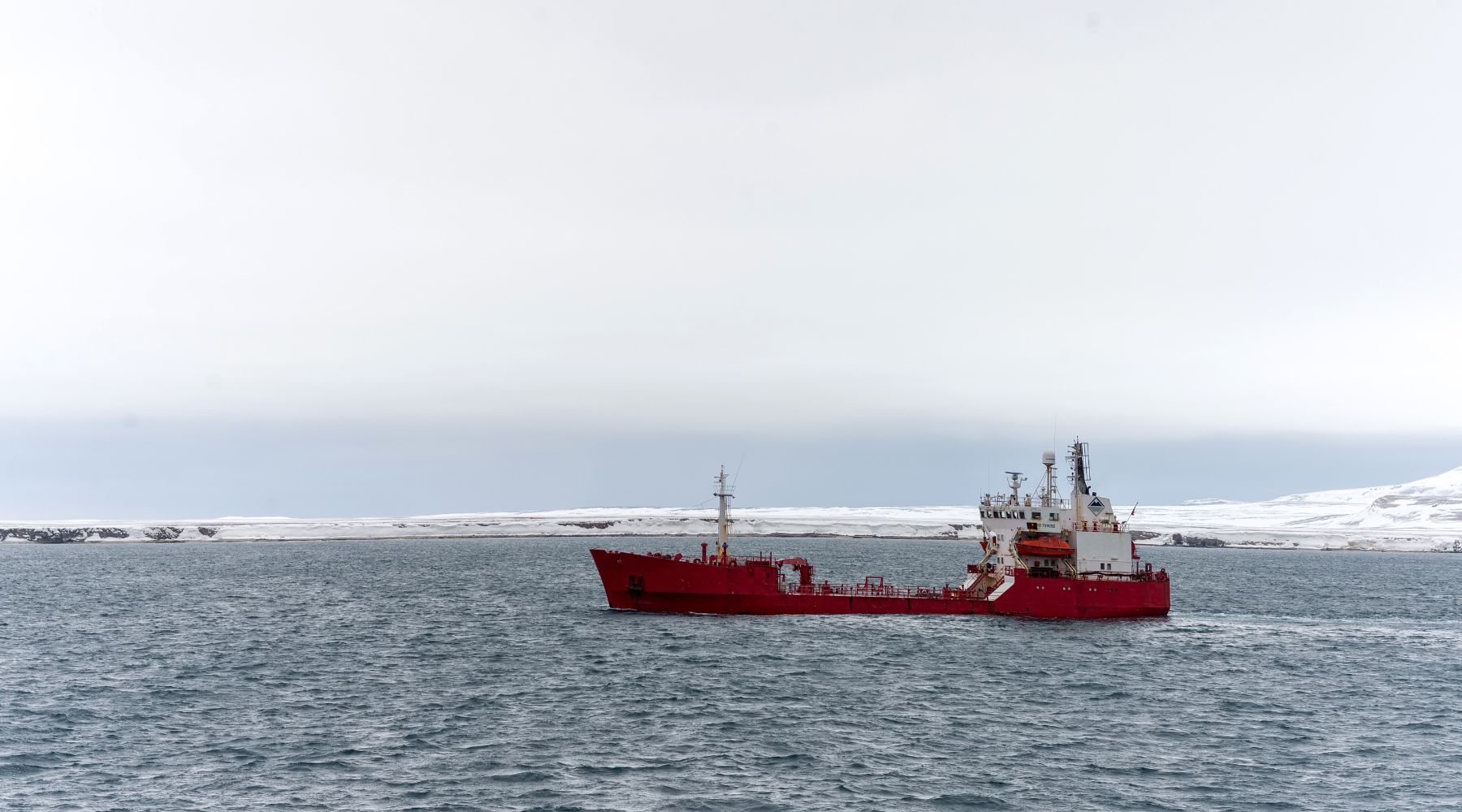
As it currently stands, Russia operates the world's only fleet of nuclear icebreaker ships in the Arctic. The United States is currently under rapid expansion of its aging icebreaker fleet, though non-nuclear. China has declared itself a “near Arctic" power and is sending its icebreaker fleet into the fray. As the Arctic ice sheets continue to recede, many analysts predict completely ice free summers in the Arctic ocean by 2040 or 2050. The great powers are gearing up to stake their claim, which includes President Trump’s claim over Greenland to that end.
While Arctic ice may be receding in the summer months, the region remains one of the coldest and harshest environments on earth for most of the year. Any conflict that expands into Alaska, Greenland, northern Canada, or even northern U.S. states will unfold in extreme cold conditions for much of that time. There are key survival lessons one needs to know to survive in Arctic weather and dry decontamination is on that list. Let’s run through what it means and why it matters in cold weather.
Dry Decontamination vs. Wet Decontamination How to Conduct Dry Decontamination at a Moment’s Notice Advantages of Dry Decontamination in Cold Weather The Coming Conflict Over the Arctic and the Ramifications for the U.S.Table of Contents
Dry Decontamination vs. Wet Decontamination

Image source: MIRA Safety®
You’d be familiar with the concept of wet decontamination if you watched any Hollywood movies featuring dangerous chemical or biological agents. A person wearing a Hazmat Suit steps into a sealed off shower and scrubs until they can take off the suit and enter another holding area. It’s the default option and not a bad option if you have enough time to set up stations prior to the incident.
You have a hot zone where the contamination is present. Then you have a warm zone that is far away enough from the hot zone, but not so close to your safe place or home location that you risk exposure. This is where wet decontamination takes place. Ideally, specialized decontamination solutions formulated to break down and remove hazardous substances are used to reduce contamination on the skin and clothing. These mixtures are designed to dilute, lift, and rinse away harmful materials more effectively than water alone.
However, if specialized decontamination products are not available, soap and copious amounts of water can still significantly reduce contamination. Thorough washing helps remove many chemical residues from the skin and fabric surfaces. After washing, exposed garments should be carefully removed and properly contained or disposed of to prevent secondary contamination. Once clean, you can move into the cold zone without risking the spread of contaminants to others.
The major problem is that when unexpectedly contaminated, the clock starts ticking before the danger spreads and you won’t have time to set up a decontamination shower system on the spot. In these cases, this is where dry decontamination becomes the most logical and rapid response. Rather than water, which could actually exacerbate some chemical threats, it relies on dry alternatives designed to get the unknown substance off of your body before you even identify the agent.
How to Conduct Dry Decontamination at a Moment’s Notice

Image source: MIRA Safety®
A primary advantage of dry decontamination is the ability to respond rapidly when the use of water is not prudent or possible. Your first step in any chemical exposure is to remove yourself from the threat. It could even be in the next room or just far enough away that you can begin the decontamination process. Your next step is then to begin removing any contaminated clothing, every single thing you’re wearing if necessary. This can remove the highest percentage of the chemical agent before it has an opportunity to set in and spread. You might wind up in your underwear, or naked, in front of other people, but that’s just a price you’re going to have to accept for the best chance of survival.
Next, you’ll have to refuse the instinct to start wiping the substance off of your body. This will only spread it around. Instead, use a blotting method where you pat down on the exposed area in an attempt to blot up the substance. If all you had on hand were paper towels, start blotting to reduce the amount of time the skin is exposed to the agent. Speed is essential here, but be methodical and not erratic in the removal. While time is of the essence, it would be a mistake to neglect using any PPE that you may have on hand. A simple rubber glove to prevent the agent from soaking through the paper towel and spreading to your hands is well worth the time and effort.
For those who like to do more advanced planning, here's MIRA Safety's DeconDust™ Dry Decontamination Powder that will assist you to this end. It is portable, affordable, and lightweight which means they make a great addition to any bugout bag. There are also different chemical detection kits that you can have on hand so that you can more quickly understand the substance with which you are dealing.
Finally, you’ll want to safely dispose of the contaminated clothing and any materials used in the cleanup. That’s the beauty of dry decontamination. Instead of spending precious minutes searching for a source of water that may not exist or even be the proper response, you’ve immediately begun the process of decontamination. Those minutes may not seem like much, but it can be the difference between life and death.
Advantages of Dry Decontamination in Cold Weather

Image source: MIRA Safety®
Perhaps the biggest advantage of dry decontamination in cold weather is because no water is required. The further north you travel, water becomes less available because it has all been turned into ice. Not to mention that pipes and other water infrastructure are known to freeze during cold snaps as far down as the deep south of the United States. Just this past month, southern U.S. states woke up to this reality that has been ongoing for weeks.
Because of this, many hazmat and emergency response units around the world, including the United States, increasingly rely on dry decontamination as an initial response method. It is effective, fast, cost-efficient, and does not depend on water logistics. In many real world incidents, dry decon is used immediately to decontaminate people, places, and things rather than traditional wet decon.
Dry decon also reduces the need to use whatever stores of water you may have on you that you will also need for survival. If this is a bug out scenario, water is heavy to carry and it should be prioritized for hydration. In addition, removing clothing and dousing a human body with water during freezing conditions is a sure fire way to make hypothermia your next big threat. You’ve got 15 to 30 minutes before the deadly condition begins to set in.
Dry decontamination is the preferred method, not only in the cold, but also due to its immediacy. Moreover, the average American family can complete this preferred method on the spot and without fancy equipment. Just understand the right process with the right materials and apply as soon as you are in a safe location away from the original agent. This process keeps you safe in the cold winters of Montana and the hot summer beaches of Florida.
The Coming Conflict Over the Arctic and the Ramifications for the U.S.

Image source: Envato
We started the article about the coming conflict over the Arctic to bring awareness and we’ll end there in order to hasten the urgency of taking the proper precautions. Military planners have long understood that northern flight paths are strategically significant, which places cold regions at the center of potential escalation scenarios. It is the shortest path for most Russia to U.S. ICBM strikes and even a frozen Arctic Sea can do nothing to stop them.
This is one of the stated reasons why President Trump was so adamant that the U.S. needed Greenland for national security. Greenland is where the early warning systems are currently located and Trump has dreams of building a Golden Dome missile defense system that will cover the Arctic.
Russia, as one might imagine, is opposed to the U.S. moves in Greenland. Denmark, which currently oversees the island, is opposed to this move. China is not happy and nor is the bulk of NATO. Their opposition is not based solely on traditional diplomatic norms where one country can’t just claim another. Their opposition is equally based on the fact that they have their own ambitions in the Arctic.
New shipping lanes are opening up with the loss of ice and significant natural resources are known to be underneath the Arctic waters. With ice free summers on the horizon, any maritime nation can make a play. With rapid expansion of global icebreaker fleets, it is clear that the major powers intend to stick around the Arctic Sea and play all year long.
What seems true is that some of the coldest regions in the Western Hemisphere have a strong chance of becoming a hot conflict zone sooner rather than later. Yesterday would have always been the best day to prepare, but as it turns out, today is always the second best day to get ready for the day most people dread. Dry decontamination should always be part of your plan, and in cold weather, there may be no alternative. . Reach out to us anytime if we can be of any help.
Frequently Asked Questions
About the author

Leave a comment