


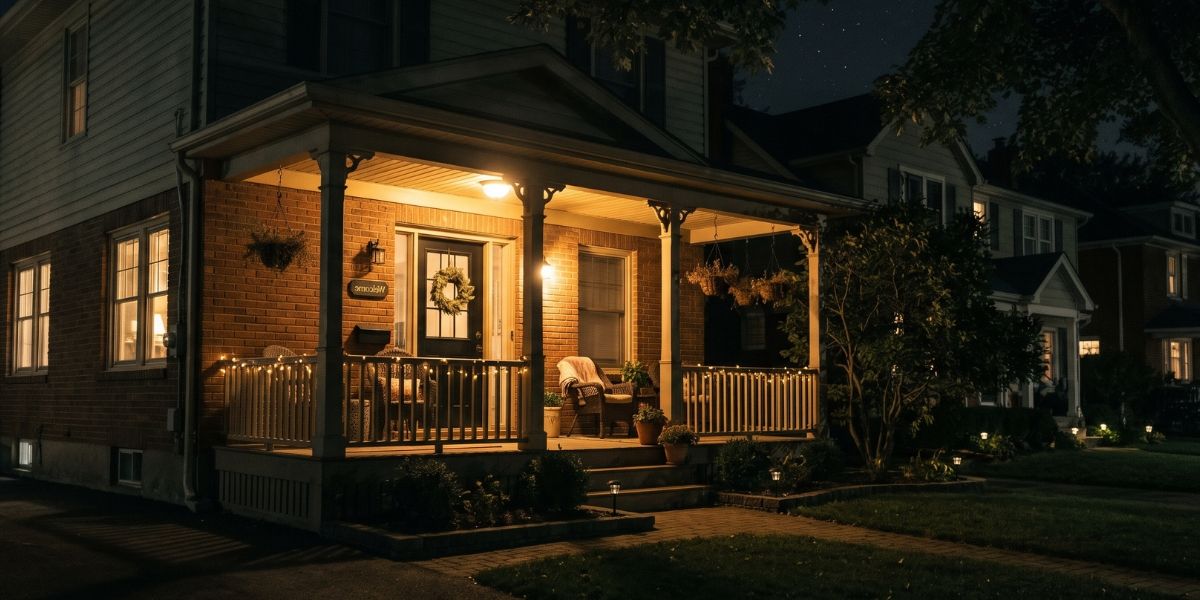
Here's how to secure your home: start at the outside and work inward: reinforce exterior doors and locks, secure windows and sliding doors, light up the perimeter, lock down the garage, set up a safe room and protect your home Wi-Fi. A room-by-room plan closes the gaps burglars look for and gives your family a plan if someone gets in.
In 20 years with the NYPD, I walked through a lot of homes after a break-in. Very few of them were hit by a criminal mastermind. Most were hit because a door was unlocked, a slider had no bar in the track, or a garage door was left open overnight. You don't need a fortress to secure your home. You need to fix the easy openings, add a few layers and make sure everyone in the house knows the plan.
How to Secure Your Home: Start With a Layered Plan Room-by-Room Home Security Checklist How to Secure Your Front Door and Other Exterior Doors How to Burglar Proof Your Home's Windows and Garage Inside the Home: Bedrooms, Valuables and a Safe Room How to Secure Your Home Wi-Fi and Smart Devices Recommended Training Frequently Asked QuestionsTable of Contents
Key Takeaways
-
Home security works in layers: the property outside, the entry points, the rooms inside and the habits of the people who live there.
-
Most break-ins come through doors, so a solid door, a Grade 1 deadbolt and a reinforced strike plate are the best first investment.
-
Sliding glass doors, ground-floor windows and the garage are the weak points most people overlook.
-
Pick one room as a safe room and stock it with a hard wired phone, a flashlight and a first aid kit.
-
Your Wi-Fi router, cameras and smart locks are entry points too. Change default passwords and keep them updated.
How to Secure Your Home: Start With a Layered Plan
The best home security tips all come back to one idea: layers. Every layer a burglar has to get through costs time and adds risk, and most burglars will move on to an easier house rather than spend the time defeating your layers.

Think of your home as four rings:
-
The perimeter. Your yard, fence, lighting, landscaping, home security signs and the view from the street. The goal is to make your house look watched and hard to approach unseen.
-
Entry points. Every door, window, garage door and basement opening. The goal is to make getting inside slow and noisy.
-
The interior. Where valuables are kept, where your family sleeps and where you'd go if someone got in.
-
People and habits. Locking up every time, not advertising when you're away and knowing what to do in an emergency.
If you're wondering how to make your home more secure without a big budget, the fourth ring is where to start. Locking doors and windows, closing the garage and keeping valuables out of sight cost nothing. The same habits that make good home safety tips, like keeping exits clear and having a plan, double as home security safety tips. The most effective upgrades come from treating it as one home security plan instead of a pile of separate gadgets.
Room-by-Room Home Security Checklist

Image source: Envato
A room-by-room walk-through is the simplest way to learn how to secure your house, because it forces you to look at each space the way an intruder would. Use this home security checklist as your starting point, and walk the house once in daylight and once at night.
|
Area |
Main Risk |
What to Do |
|---|---|---|
|
Front and back doors |
Kicked-in doors, weak strike plates, unlocked doors |
Solid-core or metal door, Grade 1 deadbolt, 3-inch screws in the strike plate and hinges, video doorbell or wide-angle peephole |
|
Sliding glass doors |
Latch is easy to force; door can be lifted off the track |
Security bar or dowel in the track, pin lock, anti-lift screws or blocks, curtains closed at night |
|
Ground-floor windows |
Unlocked or easily pried windows hidden by shrubs |
Window locks or pins, security film, trimmed bushes, thorny plants below |
|
Garage |
Open door, emergency release can be hooked from outside, unlocked door into the house |
Keep it closed, shield or secure the emergency release, deadbolt on the interior door, cover garage windows, garage door opener left in unlocked vehicle |
|
Basement |
Window wells and cellar doors out of sight |
Window locks, well covers or grates (keep them openable from inside), lighting |
|
Living room and home office |
Electronics and valuables visible from the street |
Rearrange or cover sight lines, break down boxes from new electronics before recycling |
|
Primary bedroom |
Jewelry, cash and documents in obvious places; no plan if someone breaks in at night |
Bolted-down safe, set up as a safe room, phone charging at the bedside |
|
Kids' bedrooms |
Children not knowing what to do in an emergency |
Practice the plan, make sure windows can still open for fire escape |
|
Exterior and yard |
Dark approaches, ladders and tools left out |
Motion-sensor lights, visible house numbers, lock up ladders and tools, cameras at entry points |
|
Wi-Fi and smart devices |
Default passwords, outdated firmware |
New router password, WPA3 or WPA2 encryption, firmware updates, two-factor authentication on camera and alarm apps |
How to Secure Your Front Door and Other Exterior Doors

Image source: Envato
To secure your front door, you need three things working together: a solid door, a quality deadbolt and a strike plate anchored into the house framing. Most forced entries I saw on the job weren't defeated locks. They were door frames that split because the strike plate was held on by half-inch screws.
These steps apply to every exterior door, not just the front. Back doors and side doors are often weaker and less visible, which makes them more attractive.
-
Use solid-core or metal doors. Hollow-core doors belong inside the house. If you can push a fist-sized dent into it, replace it.
-
Install a Grade 1 deadbolt. Look for an ANSI/BHMA Grade 1 rating and a bolt that extends at least 1 inch into the frame.
-
Reinforce the strike plate. Replace the short screws with 3-inch screws that reach the wall stud. A heavy-duty strike plate or door frame reinforcement kit is even better, and it's one of the cheapest upgrades you can make to secure home doors.
-
Check the hinges. Use long screws on the hinge side too. If the hinge pins are on the outside, use security hinges or set screws so the pins can't be pulled.
-
See who's there before you open. A video doorbell or wide-angle peephole lets you check without opening the door. A chain lock won't stop a determined push.
-
Get rid of the hidden key. Under the mat, in the planter and on top of the frame are the first places a burglar checks. Give a spare to a trusted neighbor or use a keypad lock.
How to Secure a Sliding Glass Door
To secure a sliding glass door, block the track, add a secondary lock and stop the door from being lifted out of its frame. The factory latch on most sliders is weak and can often be forced with a screwdriver.
Here's how to secure a sliding glass door from the inside:
-
Lay a security bar or a cut wooden dowel in the bottom track so the door can't slide open even if the latch fails.
-
Install a pin lock or a secondary keyed lock that goes through both door frames.
-
Drive a few screws partway into the upper track, or add anti-lift blocks, so the door can't be lifted off its rollers.
-
Apply security film to the glass to make it harder to break through quickly.
-
Keep curtains or blinds closed at night so no one can see inside.
How to Burglar Proof Your Home's Windows and Garage

Image source: Envato
To burglar proof your home's windows, lock every one, add a secondary lock on ground-floor windows and remove the cover that lets someone work on them unseen. The garage needs the same attention, because once someone is inside it, they're one door away from your living space.
Burglar Proof Windows
-
Lock them every time. An unlocked window is an open invitation. Check them before bed and before you leave.
-
Add window pins or keyed locks on ground-floor and easily reached windows, like those next to a porch roof or deck.
-
Use security film or laminated glass on windows near door locks, so breaking the glass doesn't let someone reach in and turn the deadbolt.
-
Trim the landscaping. Shrubs should be below window height. Thorny plants under windows make an approach uncomfortable.
-
Secure window air conditioners with brackets or screws so they can't be pushed in.
-
Don't block your fire exits. Bedroom windows are emergency escape routes. Use locks or bars with a quick-release that can be opened from inside without a key.
Secure the Garage
-
Keep the garage door closed, even when you're home.
-
Shield or secure the emergency release. A common trick is hooking the release cord through the top of the door with a coat hanger. A release shield or zip tie on the latch helps prevent this.
-
Treat the door from the garage into the house as an exterior door: solid core, deadbolt and locked every night.
-
Cover or frost the garage windows so no one can see whether your car is gone.
-
Don't leave the garage door opener in a car parked in the driveway. Take it with you or use a keychain remote.
The basement deserves the same treatment. Window wells and cellar doors are out of sight from the street, which is exactly why they're used. Lock them and light them. Once these openings are covered, it becomes much harder for anyone to get into your house quickly and quietly.
Inside the Home: Bedrooms, Valuables and a Safe Room

Securing the inside of your home means two things: making valuables hard to find and steal, and having a plan for the people in the house if someone gets in. Most burglars want to be in and out in minutes, and they head straight for the primary bedroom.
That's why burglary isn't only a property crime. According to the Bureau of Justice Statistics, a household member was present in about 28% of burglaries, and someone was the victim of a violent crime in about 7% of all burglaries. Planning for the people matters as much as protecting the property.
-
Store valuables in a safe that's bolted down, and not in the primary bedroom closet if you can avoid it.
-
Keep a home inventory. Photos, serial numbers and receipts make police reports and insurance claims much easier.
-
Break down boxes from new TVs, computers and gaming systems before they go to the curb.
How to Set Up a Safe Room
A safe room is a room your family can get to quickly, lock from the inside and wait in until police arrive. For most families, the primary bedroom works well. It doesn't need to be a reinforced panic room. (A FEMA safe room is a different thing, built to protect against tornadoes and hurricanes.)
-
Solid-core door with a deadbolt or a door security bar
-
A charged cell phone kept in the room every night, so you can call 911 even if you can't get to your main phone
-
A flashlight, a first aid kit and spare keys
-
A list of emergency contacts
-
A clear route from the kids' rooms to the safe room, or a plan for who gets them
How to Prevent a Home Invasion
The best way to prevent a home invasion is to never open the door to someone you can't identify, keep doors locked even when you're home and pay attention to unusual activity in the neighborhood. Many home invasions start with a knock, a fake delivery or someone claiming to need help.
-
Talk to visitors through a closed door or a video doorbell. Verify utility workers by calling the company yourself.
-
Lock doors when you're home, including during the day and while you're in the yard.
-
Agree on a family code word that means "go to the safe room now."
-
Watch for signs someone is checking out your house. The warning signs I cover in situational awareness apply at home too: unfamiliar cars parked repeatedly, people asking for someone who doesn't live there and knocks with no one there.
If something does happen, the goal is to make fast, simple decisions. Training methods like the OODA loop help, but the plan you've practiced ahead of time is what you'll actually fall back on under stress.
How to Secure Your Home Wi-Fi and Smart Devices

Image source: Envato
To secure your home Wi-Fi, change the router's default password, turn on WPA3 or WPA2 encryption and keep its firmware up to date. Your network matters for physical security too: cameras, smart locks, video doorbells and alarm systems all run through it.
Use this checklist to secure your home network:
-
Change the router's admin username and password from the factory default
-
Use WPA3 encryption, or WPA2 (AES) if your router doesn't support WPA3
-
Set a long, unique Wi-Fi password, and change it if you've given it out widely
-
Turn on automatic firmware updates, or check for updates every few months
-
Turn off WPS and remote management if you don't use them
-
Put smart devices and guests on a separate guest network
-
Change the default password on every camera, lock and smart device
-
Turn on two-factor authentication for camera, alarm and smart lock apps
-
Replace routers that no longer get security updates from the manufacturer
Recommended Training

Image source: MIRA Safety®
A checklist tells you what to fix. A plan tells you what to fix first, and what your family should do when something goes wrong. MIRA Safety's online courses walk you through both.
-
Create a Home Security Plan. Learn how to evaluate your property, fix the most common vulnerabilities and build several layers of protection. The right fit for homeowners, renters and families who want a clear home security plan instead of guesswork. Online and at your own pace.
-
Build Your Personal Protection Plan. Takes the same mindset outside the house: spotting danger early, staying aware of your surroundings and making sound decisions before a situation escalates. Build your personal protection plan for commuting, travel and everyday life.
Frequently Asked Questions
Sources
-
U.S. Bureau of Justice Statistics. Catalano, S. (2010). Victimization During Household Burglary.
-
Cybersecurity and Infrastructure Security Agency (CISA). Secure Our World.
-
National Security Agency. Best Practices for Securing Your Home Network.
-
Federal Trade Commission. Using IP Cameras Safely.
-
FEMA. Safe Rooms.
-
U.S. Postal Service. Hold Mail Service.
About the author

Leave a comment