


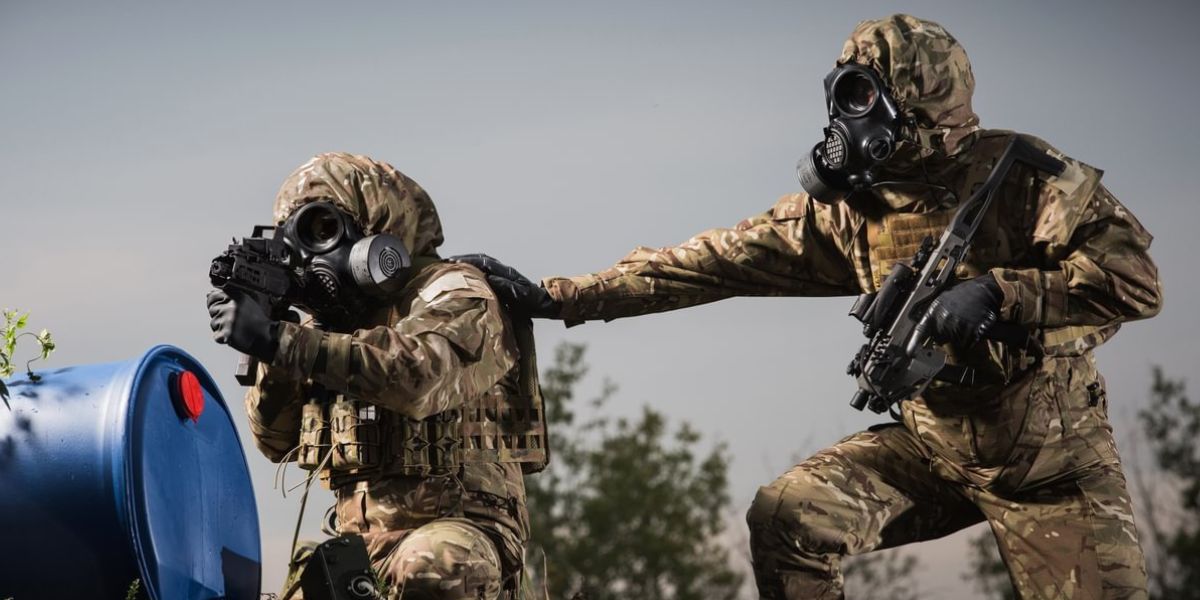
MOPP gear is the protective ensemble of mask, suit, gloves and overboots that U.S. military personnel wear against chemical, biological, radiological and nuclear (CBRN) threats. MOPP levels run from MOPP 0 to MOPP 4, and each level adds more of that gear, from simply carrying a mask to full encapsulation at MOPP 4.
MOPP stands for Mission Oriented Protective Posture. It's a standardized system developed by the U.S. military to tell personnel which protective gear to wear, carry or keep close at hand based on the CBRN threat. The goal is to keep troops protected without unduly compromising their ability to operate and complete the mission.
Key Takeaways What Is MOPP Gear? What Are the MOPP Levels? Why Do MOPP Levels Exist? Other MOPP Gear: Detection and Decontamination Recommended MOPP Gear for Civilian Preparedness Frequently Asked QuestionsTable of Contents
Key Takeaways
-
There are five MOPP levels, from MOPP 0 (gear carried or nearby) to MOPP 4 (full protective ensemble worn).
-
Each level adds protection in a set order: suit, then overboots, then mask, then gloves.
-
Tiered levels let commanders balance CBRN protection against heat, fatigue and mobility instead of choosing all-or-nothing.
-
"MOPP gear" is commonly used as shorthand for military CBRN protective equipment, and civilians can apply the same principles to their own preparedness.
What Is MOPP Gear?

Image source: MIRA Safety®
MOPP gear is the military protective ensemble that each MOPP level calls for: a protective mask, suit, gloves and overboots. Each level dictates which items are worn, which are carried and which must be available within a set amount of time. Specific models vary by country, branch and era, but the categories stay the same:
-
Protective mask: a full-face respirator, such as the CM-7M military gas mask, that protects the airway, eyes and mucous membranes from respiratory threats and chemical splashes.
-
Suit: an overgarment, like a MOPP suit, that covers the body and limbs to guard against skin exposure and chemical burns. Modern military suits often include an activated carbon layer for added protection.
-
Gloves: butyl CBRN gloves that prevent skin exposure while staying flexible enough for fine detail work.
-
Overboots: CBRN overboots that cover existing footwear, guarding against skin absorption and the puddles of CBRN agents personnel may have to cross to reach safety.
Before any item is adopted as army MOPP gear, military procurement agencies test it against known CBRN threats and certify it within specific exposure limits. Carry bags and detection devices are also part of many units' MOPP gear, though these vary more from unit to unit.
What Are the MOPP Levels?

There are five MOPP levels, MOPP 0 through MOPP 4, in order of increasing protection and operational burden. The in-theater commander or mission planners set the level for each operation, but personnel can move to a higher level at any time if a CBRN threat is detected or suspected.
|
MOPP Level |
Mask |
Suit |
Overboots |
Gloves |
Burden |
|---|---|---|---|---|---|
|
MOPP 0 |
Carried |
Readily available |
Readily available |
Readily available |
Minimal |
|
MOPP 1 |
Carried |
Worn |
Readily available |
Readily available |
Moderate |
|
MOPP 2 |
Carried |
Worn |
Worn |
Readily available |
Significant |
|
MOPP 3 |
Worn |
Worn |
Worn |
Carried |
High |
|
MOPP 4 |
Worn |
Worn |
Worn |
Worn |
Maximum |
U.S. doctrine also includes "MOPP Ready," where gear is available within about two hours, and a "mask only" option for threats such as riot control agents that don't call for a full suit.
MOPP 0
At MOPP 0, regular uniforms and gear are worn with no added protection. The protective mask is carried, and the suit, boots and gloves are kept readily available. This level provides full mobility with minimal encumbrance.
MOPP 1
At MOPP 1, the protective suit is worn over the regular uniform. The mask is carried but not worn, and the gloves and boots are kept readily available. This level adds moderate encumbrance while keeping personnel ready for potential exposure.
MOPP 2
At MOPP 2, the protective suit and overboots are worn. The mask and gloves are carried but not worn. This level has a significant impact on mobility and fatigue, but allows personnel to respond quickly when CBRN exposure is likely.
MOPP 3
At MOPP 3, the suit, overboots and mask are worn while the gloves are carried. This level places a high burden on mobility and endurance, but protects against fast-acting chemical agents that are hard to detect. Hands stay uncovered to preserve fine motor control, and personnel are trained to put on gloves immediately if a CBRN hazard is detected.
MOPP 4
MOPP level 4 means full MOPP gear: suit, mask, overboots and gloves are all worn. Personnel are fully encapsulated, which gives maximum protection against every route of exposure but carries the highest physical cost. MOPP 4 gear should only be worn for the minimum time needed to complete the task and move to a safe area.
After any exposure to CBRN agents at any MOPP level, personnel must go through decontamination and medical evaluation before returning to regular duty.
Why Do MOPP Levels Exist?

Image source: MIRA Safety®
MOPP levels exist so commanders can match protection to the actual threat, rather than keeping troops in full gear that wears them down. The levels protect the most vulnerable routes of exposure first (skin and breathing) while keeping protection for hands and feet close at hand.
In wartime or a national emergency, soldiers may need to operate in austere, dangerous conditions for long periods without support. That can mean moving long distances, staying undetected or operating complex equipment that requires full focus. Full encapsulation makes all of that harder, and keeping soldiers at MOPP 4 for too long takes a serious toll on the body. Effects range from slower work rates and accumulated mistakes to heat exhaustion, panic attacks and hallucinations, and they get worse the longer personnel stay in full gear.
The escalating scale gives commanders flexibility. If an enemy is unlikely to use CBRN agents in the area, there's no need to burden soldiers with the full ensemble, and doing so may increase their risk from conventional threats. Soldiers who are underprepared, on the other hand, may not react in time to a sudden CBRN attack, causing avoidable casualties and jeopardizing the mission. According to U.S. Marine Corps CBRN training materials, fast-acting nerve and blood agents can cause symptoms within 45 seconds of exposure, with incapacitation or death within 1 to 15 minutes. Setting the right MOPP posture ahead of time lets soldiers survive even these agents and continue the mission before moving to a safe area.
Other MOPP Gear: Detection and Decontamination

Image source: MIRA Safety®
Beyond the mask, suit, gloves and overboots, detection and decontamination equipment is also part of a unit's MOPP gear. Many CBRN threats are colorless and odorless, or can't be sensed until they've reached dangerous concentrations. Early detection lets personnel warn each other and put on protective gear before absorbing a hazardous dose. Identifying the specific agent also determines exposure limits, decontamination and disposal procedures, and medical treatment for anyone exposed.
Detection gear includes:
-
Chemical detection paper or chemical warfare agent detection strips
-
Handheld mass spectrometers
-
Gas and oxygen sensors
Different militaries, branches and specialist units may have their own additional MOPP gear requirements, particularly for detection and decontamination equipment.
Recommended MOPP Gear for Civilian Preparedness
MOPP is a military framework, but the same principle of matching protection to the threat applies to civilian disaster preparedness. A civilian CBRN kit built around the core MOPP ensemble should include:
-
CBRN gas masks: a CBRN-rated respirator protects the most vulnerable route of exposure. Inhaled gases or contaminants absorbed through the eyes can incapacitate within minutes, so a mask keeps breathing and vision clear during evacuation.
-
NBC-77 SOF CBRN filter: a CBRN-rated filter protects against a wide range of threats and lasts long enough to escape the contaminated area.
-
MOPP-1 CBRN protective suit: a CBRN-rated suit protects against more than chemical splashes. Some toxic agents absorb through the skin, and radioactive dust can leave contamination that's difficult to remove.
-
HAZ-GLOVES butyl gloves: CBRN-rated gloves protect skin from absorbed doses and corrosive agents while staying flexible enough to drive or operate equipment during an evacuation.
-
Model S CBRN overboots: many CBRN agents leave persistent puddles or residue that cling to footwear. Overboots add a barrier against absorption and are easy to remove and dispose of during decontamination.
-
Decontamination and detection gear: full military detection and decon systems are expensive and require specialized training, but basic gear helps civilians recognize a threat, report it to authorities and perform partial decontamination when emergency services aren't available.
Frequently Asked Questions
Sources
About the author

Leave a comment