


As Iran continues its military campaign of retaliation over U.S. and Israeli airstrikes,much of the Middle East has become a battlefield. Any nation in the region known to host U.S. military capabilities is being considered a legitimate target by the Iranian regime and despite U.S. missile defense capabilities, many strikes on these nations are having some success. Recent Iranian strikes on Amazon data centers in the U.A.E. also show that the scope of what Iran considers a legitimate target is widening. Big tech spends billions of dollars to build and operate these massive data centers and with a $20,000 drone, Iran can bring its operations to a halt. The consequences for the digital supply chain could be enormous and there are lessons to be learned for the future of warfare.
The “Cloud” is Now a Legitimate Military Target Prepping for a Mass Breakdown in Digital Communication What You Need When Internet Goes Offline The Ability to Communicate is the Ability to Coordinate The Future of Data Centers as a Military TargetTable of Contents
The “Cloud” is Now a Legitimate Military Target
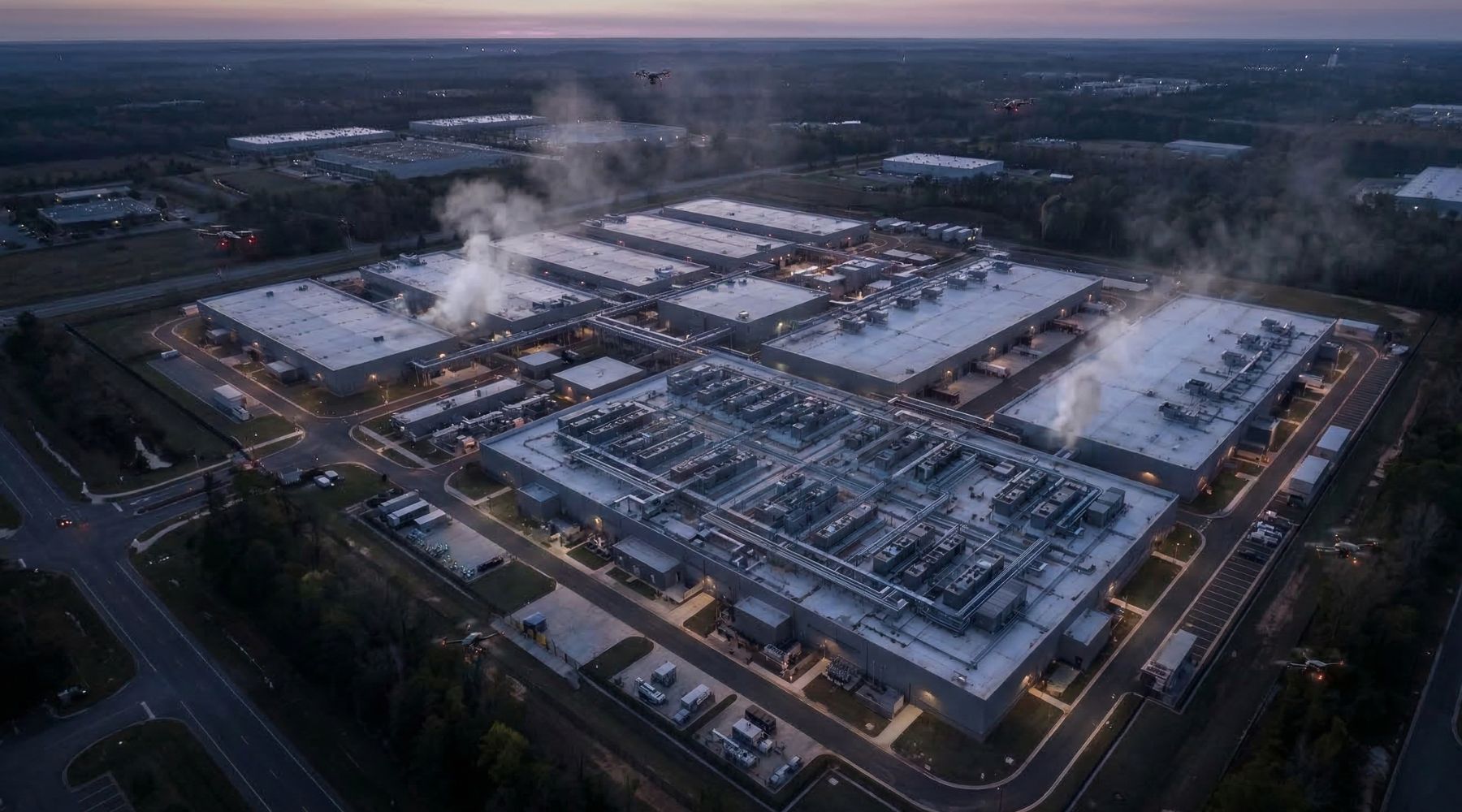
The rise and massive adaptation of artificial intelligence has resulted in a corresponding boom in the creation of massive data centers. It is estimated that AI power demands may account for 21% of all electrical usage by 2030. That’s almost a quarter of the nation’s energy output going to fuel the infrastructure being used to support AI. These centers are large and contain massive amounts of servers to keep everything from banking, logistics, commerce, communications and the lifeline of the internet afloat.

Image Source: Pexels
Unfortunately, this makes them prime military targets and one that is not easily defended. When Amazon built these data centers in the U.A.E., it was unlikely they designed them to absorb drone or ballistic missile strikes. Civilian employees at data centers didn’t apply for the job with the understanding that they would likely be considered military targets in any conflict. Iranian strikes on these data centers puts big tech on notice and the implications could be far reaching for the average civilian.
Prepping for a Mass Breakdown in Digital Communication
There has always been a certain analog nature to prepping, as most recognize how vulnerable the nation’s power and communication infrastructure is to attack or sabotage. In this regard, the average prepper doesn’t need to adapt much, knowing that data centers will be considered military targets in potential conflicts. If you are prepared to live without power, then you are prepared to live without the internet.

The problem comes during the early stages of any crisis when it is not clear whether or not this is a bug out and survive scenario, or just your standard run of the mill crisis. When you lose cell phone coverage, you are right to assume it will come back, because it always has before. When it doesn’t, you will be at the mercy of your planning for such a day. Either you were ready for this moment or you were not.
An example would be the run on banks that would come when digital infrastructure is targeted. Most don’t realize that their money is not sitting in a vault at your local bank. It resides on digital ledgers with limited quantities of physical cash at any location to back it up. The ledgers are most likely kept on the cloud and, when the data center hosting it goes up in flames, so does your access to money. You may not be dependent on the internet, but the society in which you live is dependent.

What You Need When Internet Goes Offline
Even some of the most ardent preppers often fail to realize just how reliant we all have become on the internet. As a tool for society and commerce, the internet provides far too many benefits for us to ignore. We use it for banking, communications, and navigation on an almost daily basis. So, let’s talk about a few things you will need when the internet is offline for any sustained period of time.
First and foremost, you’ll need money or other store of value items. That’s cash, silver, gold, or other items you think will be of value in the future. Cash works great for the early stages of a crisis because everyone believes it still has value. As any crisis persists, money may be less valued because of the inability to deposit or withdraw it at financial institutions. Fiat currency is always only as good as people’s faith in it. Once that evaporates, gold and silver will take the lead.

The next thing you will need when digital services are no longer available is information. Most of us can barely remember our spouse’s phone number because we are so used to our cell phone storing that information. So it is with all the information we access on a regular basis. Digital navigation should be backed up by hard physical maps. Medical instructions should be printed and laminated ahead of a digital blackout. Anything you don’t instantaneously know how to do in a crisis should have some physical backup so that you can access the information in the absence of the internet.
You will also need the ability to interpret what is happening around you without the support of traditional media. The only way to know for sure that there is a radiological threat is to have your own means of detecting one. Our entire line of decon and detection equipment works with or without the internet. There are millions of individuals in the United States who keep refreshing their computer screens and looking at phones that no longer work for information in a crisis. Don’t let that be you. Take the means of interpreting the events around you in your own hands.
The Ability to Communicate is the Ability to Coordinate
What will be most lost during a prolonged outage of the internet is our ability to communicate and coordinate with loved ones. This can be frightening with the sudden onset of a crisis and cell coverage goes down. Moreover, with the loss of the internet also comes the loss of information about what is transpiring. Meaning you don’t know where your loved ones are or what is happening to them.
The key to a great survival communication plan is that it is practiced well in advance of the crisis. A great example would be who picks up the kids from school in a crisis and who starts to harden the homestead. Getting your spouse on the phone to coordinate that will be impossible after the event takes place. Every member of the family should know their role ahead of time. Kids should know what to do and where to go if no one picks them up.

It is possible that heading home is not the best option in any given crisis. Does your family know where to head as an alternative? If possible, a set of 2 way radios are worth their weight in gold during such scenarios. Most won’t have them and when you do, that gives you a time advantage before the panic sets in throughout the rest of the community.
The Future of Data Centers as a Military Target
The reality is that, not too far back, the average American family survived just fine without the internet or the cloud. It is entirely possible to do so again. The biggest threat comes in the havoc that would be caused during the initial outage and the length it persists. If you are ready to live life in an analog world, you’ll be ready for a possible digital outage.

Unfortunately, that doesn’t solve the problem for big tech and the billions they spend to support these new military targets of the AI generation. Big tech is going to have to think about both the location and durability of massive data centers in dangerous parts of the world. Treating data centers as essential infrastructure will require planning for redundancy, hardened facilities, and dedicated security measures to protect operations and data.
The conflict with Iran is perhaps the first real conflict since the surge of massive data centers took place. If protecting them against drones and ballistic missiles wasn’t an original thought of the design, it should be now. Iran has made it clear that it views them as legitimate military targets and other nations around the world should take notice. If this is part of the next evolution of warfare, then every American should have plans in place for when the internet goes down. If we can help you in that planning process in any way, please don’t hesitate to reach out.
Frequently Asked Questions
About the author

Leave a comment