


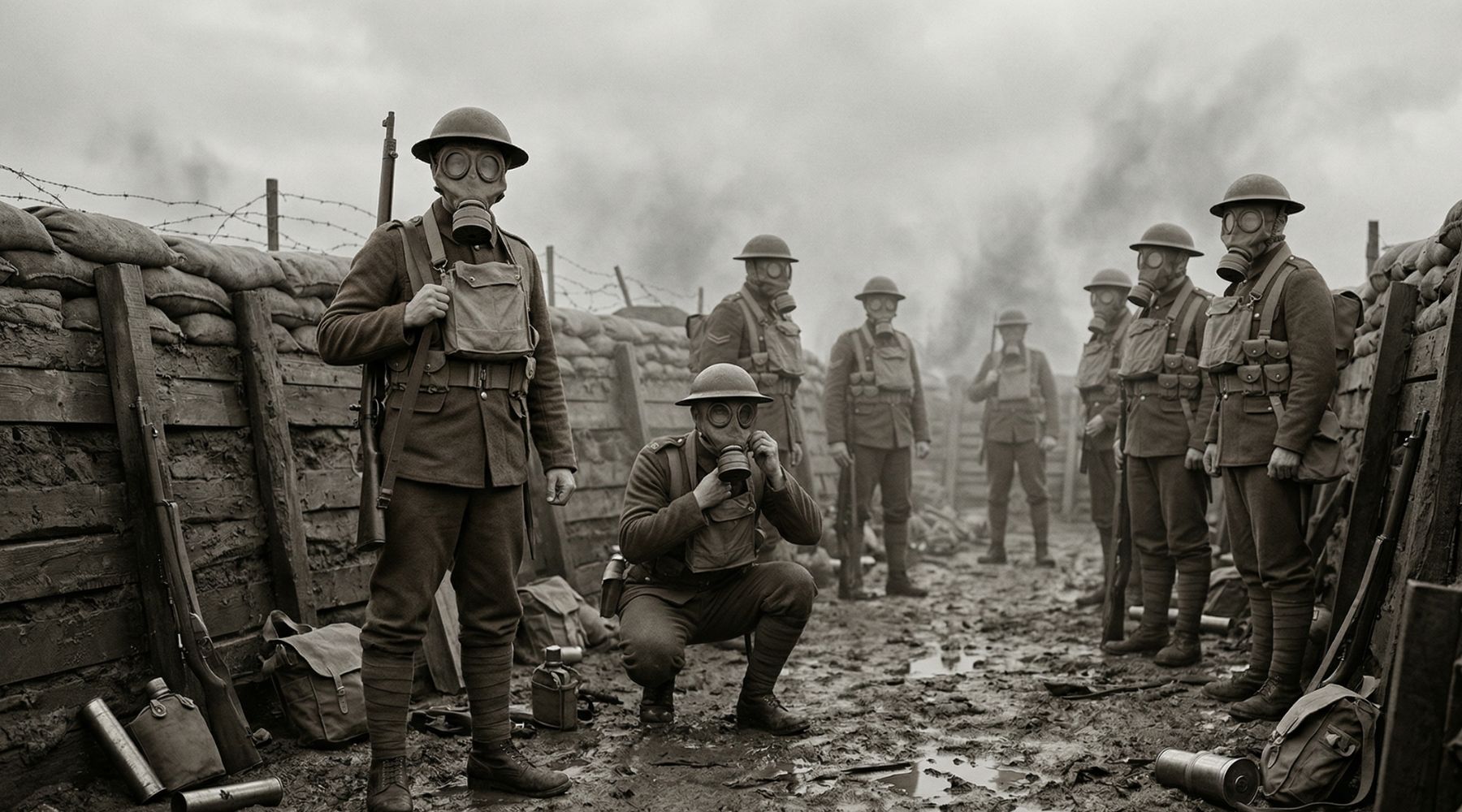
World War One can easily be described as the event that birthed the modern gas mask. Certain crude contraptions existed prior, but they were typically reserved for mining operations and other industrial settings. Even when the war began in 1914, gas masks were not a commonly issued piece of equipment for either side fighting in the war. That all changed with the 2nd Battle of Ypres in April of 1915. This was the first successful large-scale use of chemical agents in warfare where 188 tons of chlorine gas were dumped on French and Canadian troops. Casualties ranged between 6,000 and 7,000, but the fear created by that event was exponential.
Do People Still Use Gas Masks? What's the Possibility of a CBRN Incident in the United States? How To Prepare Your Family For a Possible Chemical Threat?Table of Contents
The Defense industry in all involved nations began pushing for the mass production of gas masks as, in the interim, soldiers were just told to cover their mouths with a cloth or sock and urinate on it to help neutralize the chlorine. Fast forward over 100 years later, and MIRA Safety® was born to provide professional-grade gas masks to every family in America. Long gone are the days where gas masks were reserved for military forces or only the most ardent preppers. As it turns out, clean air is essential, and every family should have it during emergencies. Let’s talk about how we got here.
Do People Still Use Gas Masks?
It is unlikely that the German Army will be dropping 188 tons of chlorine gas on your family anytime soon. If they do, you have bigger problems to worry about, but breathing won’t be one of them if you have a gas mask. The chemical threats facing families today are a bit more nuanced. We’ll cover a few of the big ones here and give you some of the history.
Pandemic Level Biological Threats

Image source: MIRA Safety®
MIRA Safety® launched in 2018 with our flagship CM-6M® gas mask. Early customers were law enforcement, military, and preppers seeking to upgrade or add to their kit. Then the pandemic hit in 2020 and everyone became a customer. That’s because, almost overnight, everyone became concerned about the ability to filter out biological agents from the air they breathe.
We scaled as fast as we could, but clearly could not meet global demand. Much like in World War I, this left Americans scrambling to put together whatever makeshift face mask they could create. People used plastic, handkerchiefs, and whatever device a group of grandmothers could crochet at the time. At least no one suggested that we urinate on those makeshift masks.
Now, these devices were not as effective as a professional-grade mask, and we’ve seen that proven and backed by the data. We don’t know if they were a placebo for the individual or a placebo for society. Yet, they became mandatory in many communities. The first cases of COVID-19 were reported in China in late December of 2019. By March of 2020, most of the world had locked down. That’s your timeline to prepare for the next pandemic level threat. Meanwhile, the shelf life of the CM-6M® is 20 years. People realized it is better to have a gas mask on hand before the next pandemic rather than try to get their hands on one during the first couple of months.
Chemical, Biological, Radiological, and Nuclear (CBRN) Industrial Threats
We’ll cover CBRN warfare soon, but first let’s talk about the most prevalent need for a gas mask that exists in every state across this great union. That is the industrial manufacturing base and energy production that fuels the American economy.
There are approximately 13,500 chemical manufacturing plants across the nation. A report indicated that there were over 825 hazardous chemical incidents between January of 2021 and November of 2023. There are those that dispute those reports, but, as you can imagine, the people disputing those reports come from the chemical manufacturing industry themselves.

Image source: Pexels
We only know about the chemical incidents that make widespread news or those that the chemical industry cannot contain. This is just at the plants themselves. At the same time, nearly 1 billion tons of hazardous materials are shipped by freight every year. Check your neighborhood for nearby chemical plants or rail lines. If none are close, that’s good to know. This is simply to help you assess potential risks and prepare in case of an industrial gas leak or similar.
The Chemical Threat Posed by Terrorist and State Level Agents
Perhaps most recently on the minds of average Americans are the threats posed by terrorists and other state level agents. ISIS would be an example of a terrorist organization and Iranian sleeper agents would be an example of the latter. As we are engaged in an open military conflict with Iran, these concerns are at an all-time high.
Much like the soldiers in World War I, the civilian populations of Europe were not prepared for the concept of chemical warfare at the onset of the war. Any gas masks produced were rushed to the front lines and, again, civilians were left with whatever makeshift contraption they could create. By World War II, gas masks were given to the civilian population and as early as 1940, they were testing gas mask options for babies.
War has a way of changing the general mindset of the civilian population, particularly when the war is brought home to their own shores. The United States has largely enjoyed the natural defensive barriers of the Pacific and Atlantic oceans for a couple of centuries now. However, drone technology and rapid advancements in artificial intelligence are making the world a smaller place.
We don’t think that we’re going to see a Pearl Harbor style attack against the United States anytime soon. Our technology is too great and our intelligence networks would see it coming a mile away. Iran simply needs to get a drone within 1,500 to 2,000 miles of our shores before they could launch an attack. That’s one boat in the vastness of the Pacific and the Pacific is a big place.
What's the Possibility of a CBRN Incident in the United States?
Here at MIRA, we teach preparedness over panic. We identify the threats because we want you to be ready and not afraid. We also try to help people understand the difference between possibility and probability. You have homeowners insurance on your home, not because a fire is probable. The odds are low, but it is entirely possible and the cost of not having insurance is too high.

The same applies to CBRN threats in the United States. This is not about estimating specific attack scenarios or assigning probabilities to chemical plant fires, it is about recognizing potential hazards and planning accordingly.
A CBRN threat is possible for all the reasons we mentioned above. They could be caused by humans or caused by an earthquake that was hundreds of years in the making. Much like losing your home in a fire, the cost of being unprepared for these events is too high. That’s why we offer gas masks for the entire family.
Gas masks are no longer a niche item reserved only for the lone wolf prepper. Gas masks have become mainstream Americana and with each new threat, more and more families are understanding the need to be ready for the possible. No more making face masks out of socks and handkerchiefs. The threat is real, but thankfully, so is the solution.
How To Prepare Your Family For a Possible Chemical Threat?
When it comes to prepping, the best day to get ready was always yesterday. The second best day is always today. It doesn’t matter where you are in this process, we’re just glad that you are here and researching the information. We saw how quickly the pandemic went from early news reports to global lockdowns. We’re of the firm belief that your family should use that experience to take early practical and informed steps to protect your household.

In researching our products and chemical threats, there are things we wish we didn’t learn about how common chemical incidents can be in the United States. However, that knowledge is a burden we gladly bear on your behalf to help you stay ready for the day that most people dread. Finally, there are ongoing international conflicts, so prudence and planning are reasonable. Having a gas mask is a practical, mainstream preparedness measure.
We didn’t know a global pandemic was going to strike two years after we launched MIRA Safety®. We didn’t know that the United States would engage Iran in military conflict. We just know what happens when people are not ready for the worst. That’s what moves us every day, as we are as much a mission as we are a company. Gas masks are no longer a niche survival item, and we have the orders from the full spectrum of citizens from sea to shining sea to prove it. Keep training and stay ready.
Frequently Asked Questions
About the author

Leave a comment