


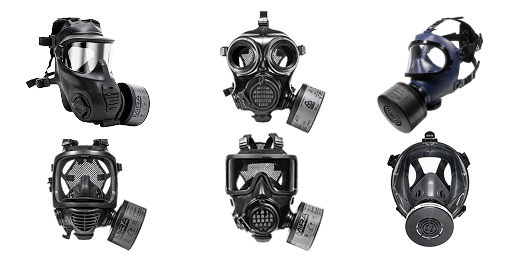
The best CBRN gas mask is the one matched to your specific threat, fit, and use case. A gas mask is a tool, and the right tool depends on whether you are preparing for nuclear fallout, chemical warfare agents, wildfire smoke, or civil unrest.
Key Takeaways Quick Comparison: 5 Best Gas Masks What Makes a CBRN Gas Mask Actually Good? 5 Things to Check Best CBRN Gas Masks for Preppers and Civilians: Our Top Picks Choosing a Gas Mask by Threat: Which Mask for Which Scenario Gas Mask Filters Explained: What You Need to Know How to Size and Fit a Gas Mask Correctly Summary: How to Find the Best Gas Mask in 2026 Gas Mask Standards, History, and RegulationsTable of Contents
Understanding how you intend to use your gas mask will help lead you to the gas mask choice that is right for you and your family. Is it merely for industrial purposes because you live or work near toxic environments? Do you intend to fight in this gas mask and, as such, do you have a gas mask that gives you the proper field of vision to shoot, move, and communicate?
To help you along in this decision, we're going to cover the full range of MIRA gas masks and use them as our guide. We'll leave nothing on the table so that by the end of this article, you are ready to make the right decision to keep your family safe when it matters most.
Key Takeaways
-
The best CBRN gas mask for most civilian buyers is the CM-6M Tactical Gas Mask: full CBRN certification, 40mm NATO filter thread, panoramic visor, and butyl rubber construction.
-
A CBRN-rated gas mask is one tested against chemical, biological, radiological, and nuclear threats, including sarin, VX, mustard, and chlorine.
-
Filter thread compatibility matters. Insist on the 40mm NATO standard (EN 148-1) so any compliant filter from any manufacturer will fit.
-
Children need a purpose-built mask. The MD-1 is engineered for ages 3 to 12 with a smaller face seal and the same 40mm NATO thread.
-
A gas mask is only as effective as its filter. The NBC-77 SOF is MIRA's recommended CBRN filter and meets EN 14387.
Quick Comparison: 5 Best Gas Masks
 Image Source: MIRA Safety®
The short answer for most civilian buyers is the CM-6M Tactical Gas Mask: CBRN-certified, 40mm NATO thread, panoramic visor, and trusted by special operations units and law enforcement agencies worldwide. The comparison table below covers the full MIRA gas mask lineup side by side for buyers who want the finer details.
Gas Mask Comparison: MIRA Safety 2026
|
CM-6M Tactical |
CBRN ✓ |
Panoramic visor |
Butyl rubber |
S/M/L |
Best overall civilian & prepper mask |
|
CM-7M Military |
CBRN ✓ |
Binocular visor |
Butyl rubber |
Universal |
Best for rifles, optics, prescription lenses |
|
CBRN ✓ |
Panoramic visor |
Butyl rubber |
S/M (kids) |
Best for family protection, ages 3–12 |
|
|
CM-6M + HAZ-SUIT |
CBRN ✓ |
Full body |
Butyl + HAZMAT |
Multiple |
Best complete CBRN protection bundle |
|
C21 + MOPP Suit |
CBRN ✓ |
Full body |
Activated carbon |
Multiple |
Best for active tactical CBRN environments |
What Makes a CBRN Gas Mask Actually Good? 5 Things to Check
 Image Source: MIRA Safety®
A quality CBRN gas mask must meet five non-negotiable criteria: full CBRN certification, a 40mm NATO filter thread, a verified face seal, an unobstructed visor, and a chemical-resistant body material. The five sections below explain how to evaluate each one, whether you buy from MIRA Safety or from a competitor.
1. CBRN Certification
CBRN stands for Chemical, Biological, Radiological, and Nuclear. These are the four threat categories a properly rated mask must protect against. There are companies out there who use CBRN as a marketing tool but lack the actual certification. If the mask doesn't explicitly state CBRN or NBC certification, it is not CBRN rated.
For example, we sell the CM-i01 full face respirator which is a great mask. However, we are clear in our description that this is not a CBRN mask as the face seal is not resistant to blistering agents.
This mask is intended for industrial civilian use where wildfire smoke or industrial hazards are the concern. If you want a mask that holds up against CBRN threats, make sure it explicitly states that it is tested and rated as such.
2. Filter Thread Standard: 40mm NATO vs Proprietary
 Image Source: MIRA Safety®
A professional grade gas mask without a filter is just a halloween costume. The filter is what actually saves your life and the mask is just the delivery mechanism.
There are gas masks out there that use manufacturer specific filter connections. No matter how they attempt to market this system as unique and proprietary, it locks you into that brand's filters, which often come at higher prices and limited availability.
All MIRA Safety masks use the 40mm NATO thread standard. The NATO standard exists so that the entirety of NATO forces can use the gear interchangeably.
MIRA Safety recommends pursuing a gas mask that uses the 40mm NATO thread for that reason. Supplies of NATO-thread filters are ample, and if you stumble across a stash of filters in a survival environment, the odds favor 40mm over a proprietary brand.
3. Face Seal Quality
 Image Source: MIRA Safety®
The best filter in the world is useless if contaminated air bypasses the mask through a poor face seal. A proper gas mask must create an airtight seal against the face.
Cheaper knockoff gas masks often fail at the face seal because they use lower-grade materials instead of silicone or butyl rubber. A poor-quality mask may seem to fit, but discovering a leaking seal once gas begins to enter the mask is too late.
Always perform a seal check when receiving your gas mask. This is true of our masks as well. We use the best bromine butyl rubber, but there are various factors that can affect the seal.
For example, we are up front that our CM-8M Gas Mask could cause problems for people with narrow faces. Because the visor is rigid and does not flex, it doesn't conform to the face in the same way as some of our other gas masks. Always check the seal when purchasing a gas mask.
4. Visor Type and Field of View
Gas mask visors can vary significantly and that is true of our line of products as well. Narrow monocular or dual port designs can restrict peripheral vision.
Visor design should be matched to your intended use. A high-speed tactical environment favors a panoramic view for full peripheral awareness.
That doesn't mean that there is not a use case for dual port designs. Our CM-7M performs great with rifles and optics. The mask gives you proper eye relief across a wide variety of set ups and makes long gun use feel more natural. You just have to decide how you intend to use the mask and then choose the visor that fits the mission.
5. Material: Butyl Rubber vs Silicone vs EPDM
 Butyl rubber has the highest chemical resistance and is the standard for military gas masks. However, it is heavier and less comfortable during extended wear. That's a small price to pay if you think you will be going up against chemical weapons and blistering agents.
Meanwhile, silicone is lighter and more comfortable, while still offering good chemical resistance. Personally, we think the trade off of comfort is not worth the loss in protection. Nothing about a CBRN environment screams comfort and we say go for top quality to ensure that you survive the day.
What you want to watch for, especially in cheaper brands of gas masks, is the use of Ethylene Propylene Diene Monomer (EPDM). This is a cheaper synthetic rubber that is adequate for industrial use, but not for true CBRN environments. You might save a few bucks, but pay for it in the long run.
Best CBRN Gas Masks for Preppers and Civilians: Our Top Picks
Each of the gas masks below is CBRN-certified, uses the 40mm NATO filter standard, and is designed for a specific civilian or prepper use case. Pros and cons follow each pick so you can match the mask to the mission.
🛡 #1 MIRA Safety CM-6M Tactical Gas Mask: Best Overall
Best overall CBRN gas mask for civilians, preppers, and families
 Image Source: MIRA Safety®
We believe the CM-6M is the best overall gas mask for civilians and preppers. As we mentioned at the beginning of the article, it is trusted by law enforcement and special operators around the world.
Pros
-
Full CBRN certification, tested against chemical, biological, radiological, and nuclear threats
-
40mm NATO filter thread compatible with any NATO standard filter
-
Wide panoramic visor with excellent field of view
-
Accepts drinking tube insert, ideal for extended wear
-
Available in S/M/L for proper fit for different face shapes and sizes
-
Compatible with MIRA Safety VK-450 powered air system
Cons
-
Accurate sizing required because narrower faces may struggle to achieve a perfect seal
-
Butyl rubber can feel warm in hot environments during extended use
Our Take: The CM-6M is our most recommended mask for civilians because it covers every realistic threat scenario without over-complicating the matter. CBRN certified, NATO filter compatible, and wide vision. It checks every box. This is the one to grab if you're not sure where to start.
🛡 #2 MIRA Safety CM-7M Military Gas Mask: Best for Rifles & Optics
Best gas mask for tactical use with long guns, optics, and ballistic helmets
 Image Source: MIRA Safety®
Pros
-
Full CBRN certification
-
Dual filter ports for balanced airflow and reduced breathing resistance
-
Designed for use with ballistic helmets and communications equipment
-
Drinking system compatible
-
Eyeglass insert compatible for prescription wearers
-
Enhanced eye relief that works naturally with optics and iron sights
Cons
-
Limited peripheral vision due to recessed binocular lenses
Our Take: The CM-7M is a great choice for those wearing prescription lenses or those who intend to use the mask with long guns and optics. The low profile allows for integration with modern ballistic helmets and ear protection. If the mission involves shooting, the CM-7M is the right tool.
🛡 #3 MIRA Safety MD-1 Children's Gas Mask: Best for Families
Full CBRN protection for children, because your family means everyone
 Image Source: MIRA Safety®
Best gas mask to ensure protection is offered to the entire family.
Pros
-
Full CBRN protection for children, 180 minutes rated
-
Built for smaller faces with two sizes to ensure proper fit
-
40mm NATO filter compatible
-
Adjustable harness for growing children
-
Drinking tube compatible
Cons
-
Children will eventually outgrow the mask, so size testing is required as they grow
-
Seal must be retested regularly as children's faces change
Our Take: If you have a gas mask for yourself, then one for your child is essential. There are few scenarios more frightening than to be in a CBRN environment with proper protection only to realize your child has none. This is a must have for every prepared parent.
🛡 #4 MIRA Safety CM-6M + HAZ-SUIT Bundle: Best Complete Protection
 Image Source: MIRA Safety®
The most comprehensive CBRN protection package for nuclear and chemical scenarios
Most affordable and comprehensive complete protection bundle for CBRN scenarios.
Pros
-
Full CBRN coverage that protects both respiratory system and skin
-
HAZ-SUIT rated for chemical splash and radiological particulate contamination
-
Beta particle protection, critical for nuclear fallout scenarios
-
Compatible with all 40mm NATO CBRN filters
-
Single use design with no cross contamination risk and easy decontamination
Cons
-
Single use suit that is not reusable after exposure
-
Requires practice donning the suit quickly under pressure
Our Take: A HAZ-SUIT is the perfect companion to your gas mask in a CBRN environment. It protects the skin from beta particles and chemical splashes, whereas a gas mask alone only protects the respiratory system. The extra cost is minimal compared to the enhanced protection offered. For nuclear preparedness, this bundle is the correct answer.
🛡 #5 C21 Tactical Gas Mask + MIRA Safety MOPP Suit: Best for Active Tactical Use
 Image Source: MIRA Safety®
Military-grade CBRN protection for environments where you have to shoot, move, and communicate
Best bundle when you know you will have to shoot, move, and communicate during the harshest of CBRN environments.
Pros
-
Military MOPP specification, the same protection used by military forces
-
Activated carbon lining absorbs chemical vapor and particulates
-
Pairs with any CBRN mask
-
Better vapor protection than standard hazmat suits
-
Designed for active use in a tactical environment
Cons
-
Heavier than standard hazmat suits
-
Takes more practice to don quickly under the pressure of a CBRN threat
-
Higher cost than the HAZ-SUIT bundle
Our Take: When it really matters most, you can't beat the protection of a C21 and MOPP suit combined. Designed for when you know you will have to fight your way through a CBRN environment, it gives you the advantage when your adversary is likely not as prepared.
Choosing a Gas Mask by Threat: Which Mask for Which Scenario
 Image Source: MIRA Safety®
The right gas mask for wildfire smoke is not necessarily the right gas mask for nuclear fallout. Here's how to match the mask to the threat you're actually preparing for.
Gas Mask for Nuclear Fallout
Nuclear fallout produces radioactive particulates such as alpha and beta emitters that are inhaled and cause internal radiation exposure. A CBRN-certified gas mask blocks these particles completely. The NBC-77 SOF filter is specifically reactor-certified, meaning it protects against radioactive iodine (I-131) in addition to standard particulate threats.
For nuclear scenarios, pair the CM-6M with the NBC-77 SOF filter and a HAZ-SUIT. The gas mask protects your lungs. The suit protects your skin from beta particles. See our complete nuclear attack map and preparedness guide for the full picture.
Gas Mask for Wildfire Smoke and Industrial Hazards
Not every scenario requires full CBRN certification. For wildfire smoke, industrial chemical accidents, or air quality emergencies, the CM-i01 full face respirator is a practical and more affordable choice.
The CM-i01 provides full-face protection that includes the eyes, which matters in heavy smoke where standard N95s leave eye tissue exposed. The CM-i01 does not carry CBRN certification, which we state plainly in its product description.
If your threat is wildfire smoke or toxic industrial chemicals rather than chemical warfare agents, the CM-i01 is the right tool for the job.
Gas Mask for Tear Gas and Civil Unrest
Tear gas (CS gas) and pepper spray are chemical irritants that any CBRN-rated mask with a standard NBC filter handles completely. The CM-6M's panoramic visor gives you full situational awareness in unpredictable environments.
The CM-7M's binocular design works well with ballistic eyewear and helmets for those operating in a law enforcement capacity. Either mask with a standard 40mm CBRN filter will handle tear gas without issue.
Gas Mask for CBRN and Chemical Warfare Agents
Full CBRN protection sits at the top of the gas mask pyramid. The required configuration is full CBRN certification, a butyl rubber face seal, a 40mm NATO thread, and the NBC-77 SOF filter.
No shortcuts. If you think there is any realistic chance you are going up against nerve agents, blister agents, or weaponized biological threats, there is no substitute. The CM-6M paired with the NBC-77 SOF is the answer.
The CM-6M + HAZ-SUIT bundle extends that protection to your skin. The C21 + MOPP suit takes it to military specification. Decide how much you need based on the threat profile you're preparing for.
Gas Mask Filters Explained: What You Need to Know
A gas mask filter is the replaceable cartridge that captures chemical, biological, radiological, and nuclear contaminants before they reach the wearer. A mask is only as effective as the filter attached to it.
Below are the standards, ratings, and service-life facts every buyer should know. For a full deep dive, see our complete gas mask filter guide.
40mm NATO CBRN Filters
The 40mm NATO thread is the international standard for military grade gas mask filters and it is what we use for our professional grade gas masks for civilians. A CBRN rated filter protects against:
-
Chemical agents: nerve agents (sarin, VX), blister agents (mustard gas), blood agents
-
Biological agents: anthrax, ricin, and other biological warfare agents
-
Radiological: radioactive particulates such as alpha and beta particles
-
Nuclear fallout: radioactive dust and aerosols including radioactive iodine (I-131)
-
Industrial chemicals: broad spectrum organic vapors and particulates
NBC-77 SOF: Our Recommended CBRN Filter
Not all 40mm CBRN filters are equal. The NBC-77 SOF is our top recommendation for nuclear and CBRN preparedness for two reasons: (1) it carries the reactor certification that specifically protects against radioactive iodine, a critical distinction for nuclear scenarios that most filters lack, and (2) it has a 20-year sealed shelf life, versus the 7–10 year shelf life of most standard filters. Buy it once, store it sealed, and it's ready two decades from now when you need it.
Gas Mask Filter Service Life
It is important to understand that once a CBRN filter is opened and exposed to air, its service life begins to wind down even without active use in a CBRN environment. The filter will provide 8 to 24 hours of protection in a contaminated environment depending on the concentration of the contamination.
That's why we recommend having a minimum of two spare filters per mask in any preparedness kit. The filter you use to practice with on a regular basis may not be the one you want to use immediately when a CBRN threat breaks out.
Buy sealed filters. Store them sealed. The filter you crack open to practice with is not your emergency filter. Stock a minimum of 3 per mask: 1 for practice, 2 sealed for when it counts.
How to Size and Fit a Gas Mask Correctly
 Image Source: MIRA Safety®
Correct gas mask fit is verified by a negative-pressure seal test, not by mask size alone. Some MIRA gas masks come in S/M/L sizing while others use a universal fit, but the determining factor is whether the seal holds.
Block the filter port and inhale for about 10 seconds. No air should enter the mask, and you will feel resistance as you attempt to breathe in. If air leaks in, the mask either does not fit or is not sealed correctly.
The great news is if the mask doesn't fit, we will offer free exchanges. It's part of our "if it doesn't fit, we will acquit" exchange policy.
You should also note that facial hair can affect the seal. If you have a bushy beard when you buy the gas mask and then shave it all off, perform another seal test to make sure it still works the same. In more cases than not, a clean shave is what is going to give you a proper seal.
Finally, we recommend that you practice putting your gas mask on under time sensitive constraints. The military standard is to don a gas mask in under 9 seconds.
That takes practice. If you have children, they need to practice with their mask as well. You can make it a game or competition to make practice fun for them.
Summary: How to Find the Best Gas Mask in 2026
The best gas mask in 2026 is the one matched to your threat profile, family size, and budget. Modern civilian gas mask technology has advanced significantly in the last 20 years, and the MIRA Safety lineup covers the common scenarios: CM-6M for general civilian use, CM-7M for shooting and prescription-lens wearers, MD-1 for children, and HAZ-SUIT or MOPP bundles for full-body CBRN protection. The first step to finding the best gas mask is to understand how you intend to use it.
If you're the type of prepper that loves to geek out on the details, you can really get into the specifics about how gas masks work by reading this excellent article written by one of our authors. Next, make sure you find a quality filter that is up to the task and equal to the quality of the mask.
In our view, it's 40mm NATO standard or bust. Finally, once you select the mask, conduct a proper seal test and don't forget to practice often. You should always train like you intend to fight and if you are preparing for a CBRN threat, only practice and repetition will win the day.
Armed with this information, you'll have everything you need to make sure that you have a proper gas mask for every member of your family and you stand ready to face the day that others dread. Stay safe and keep preparing.
Nuclear preparedness: US Nuclear Attack Map - 2026 Targets & Fallout Guide.
Complete kit guide: Nuclear Survival Kit Checklist.
MOPP gear explained: MOPP Gear: Complete Guide.
Gas Mask Standards, History, and Regulations
A Brief History of the Gas Mask
The gas mask traces its origins to American inventor Lewis Haslett, who patented the first practical respirator in 1847. The device used a one-way valve and a simple wool filter to protect coal miners and firefighters from particulates.
The technology jumped forward during the First World War after the Second Battle of Ypres in 1915, when German forces released chlorine gas against Allied troops and turned chemical weapons into a battlefield reality. Within months, both sides had developed full face respirators with activated charcoal filters, the same core technology that protects civilians today. The Second World War brought gas mask production to an even larger scale, with civilian gas mask programs in Britain distributing more than 38 million masks to the public.
EN 14387: Filter Color Coding Standard
European standard EN 14387 governs filter color coding so that buyers can identify protection types at a glance. The color bands wrap around the filter cartridge and indicate which threats the filter neutralizes.
Brown bands cover organic vapors and gases, grey covers inorganic gases such as chlorine, yellow covers acid gases, green covers ammonia, white covers particulates only, blue covers nitrogen oxides, and red covers mercury vapor. Combined CBRN filters carry multiple bands, often labeled ABEK or ABEK-P3, which signals broad-spectrum protection against the four main gas categories plus particulates.
GOST: Russian and Eurasian Filter Standards
GOST is the filter standard used across Russia and the Commonwealth of Independent States. Some older surplus masks and filters are GOST rated rather than EN rated. International buyers should verify which standard applies in their region before purchasing, since GOST and 40mm NATO threads are not always interchangeable.
ITAR and EAR: US Export Regulations
US-manufactured gas masks and certain CBRN components fall under the International Traffic in Arms Regulations (ITAR) and Export Administration Regulations (EAR). Civilians purchasing within the United States face no restrictions, but international shipments may require export licensing. If you intend to ship gas masks abroad, consult the manufacturer about export documentation before placing the order.
Frequently Asked Questions
About the author

Leave a comment