


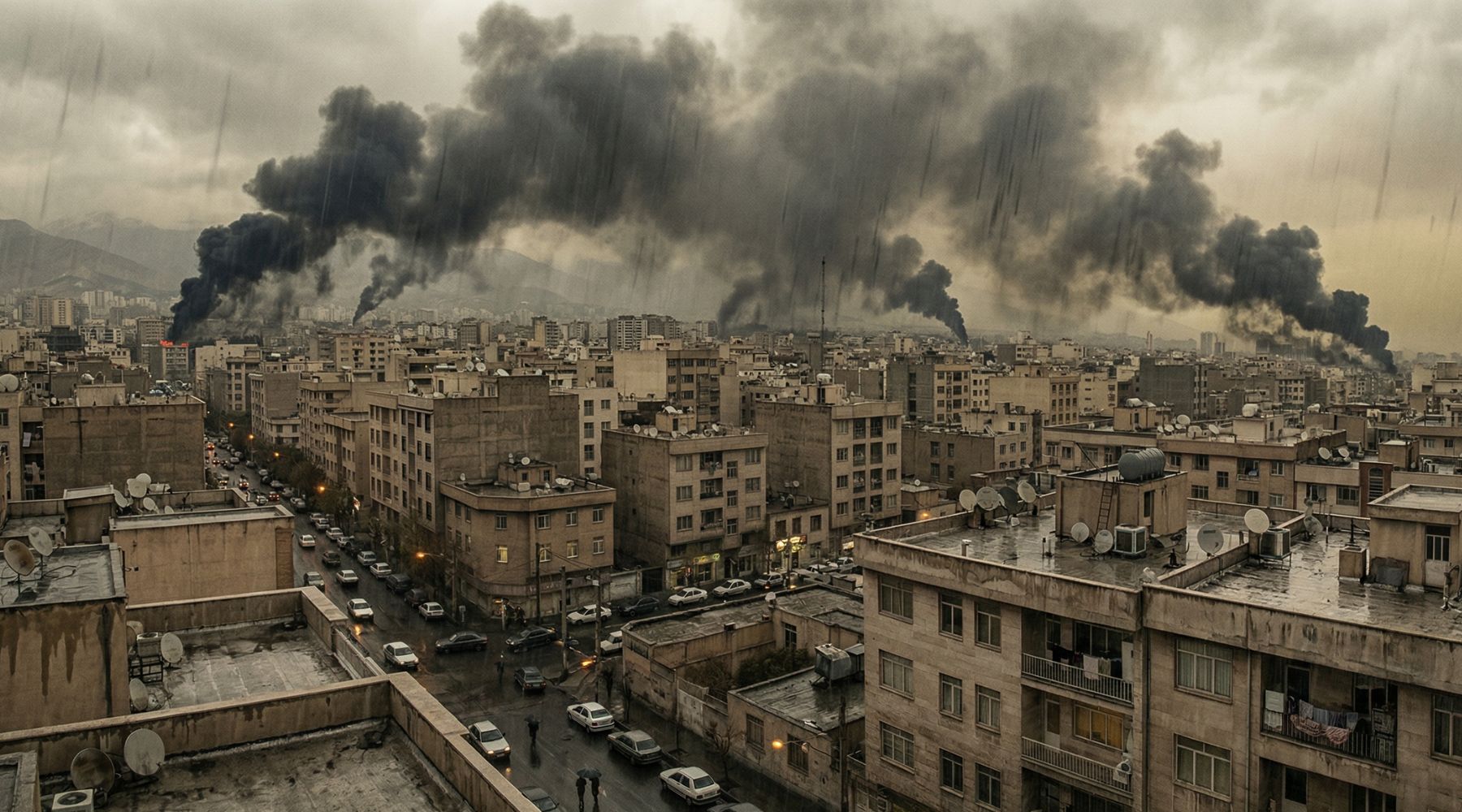
On Saturday, March 7th, Israeli warplanes struck four oil storage facilities and a transfer station in Tehran. The Israeli Air Force asserted these oil facilities were owned and operated by the Iranian Revolutionary Guard Corps, and that targeting them would have a direct impact on the IRGC’s ability to attack Israel and allied nations during the ongoing hostilities. In the immediate aftermath of the strikes, residents in Tehran reported and filmed oil fires that had spread into the city’s storm drains and sewer system. One incredible video shows what appears to be a chain of explosions caused by the oil leaks into the city. Another resident filmed the Aqdasiyeh Oil Depot in northern Tehran, showing extensive damage and a raging fire across most of the facility. Damage to oil infrastructure Toxic rain Local and regional health risks Lessons learned
Table of Contents
By morning, residents woke up to thick clouds of smoke over the city, while black rain fell onto their rooftops. The oil fires burned for several days, continuing to choke the city’s 10 million residents with smoke and prompting city officials to issue health warnings about the air and water quality. Leila, a 27 year old teacher in Tehran, described the ongoing situation, “It’s as if all the cars and the street pavement have been coated in black paint. Today I was in the car for just 15 minutes, breathing this air. I don’t even know what it is, and now I have a headache. The skin on my face, especially my lips, is sore and raw. It burns and feels like diluted tear gas is in the air. It irritates my eyes, and I keep needing to clear my throat.”
The oil fires and resulting black rain triggered worldwide concerns about the health and environmental consequences of so much oil infrastructure burning across the region. Is the black rain phenomenon just soot staining the ground? Is it acid rain? Or is it something even more dangerous that could taint the ground and water supply for decades to come?
Damage to oil infrastructure

The four facilities hit by the March 7th airstrikes were major parts of Iran’s oil infrastructure. While we don’t have publicly available information on how much oil was stored in the facilities at the time of the strike, the refinery in Tehran had a processing capacity of over 225,000 barrels of oil per day, and that was only one of the four targets. Once the storage tanks were cracked open, large quantities of both processed and unrefined fossil fuels spilled out, feeding the flames with a toxic mix of hydrocarbons. According to Marsha Wills-Karp from the Johns Hopkins Bloomberg School of Public Health, one of the first burn products of an oil fire are large quantities of carbon dioxide. Burning oil releases enough CO₂ to displace oxygen, causing early stages of suffocation in the people immediately surrounding the blaze. Symptoms among the affected include rapid heartbeat, rapid breathing, headaches, dizziness, and extreme shortness of breath.
The smoke combined with a storm system moving through the area to create the black rain. Iranians as far as 70 miles north of Tehran reported the black rain, with one resident saying he didn’t even recognize his car the following morning.
Toxic rain
 Image Source: Pexels
Oil itself is a complex mix of organic compounds. As oil is refined into different fuels, different components are extracted from the source and treated with a variety of chemicals to enhance particular properties. Exactly what burn products are released when oil catches fire, like in Tehran, depends on where in the distillation and refining process it is. World Health Organization spokesperson Christian Lindmeier said that the fires in Tehran had released sulfur dioxide and nitrogen oxides, which acidify water to create acid rain. The ash itself produced large amounts of fine particles in the 2.5 micron range (PM2.5), which are linked to long-term health effects from strokes and heart attacks, to dementia.
As the soot rose into the atmosphere, the carbon-rich particles were trapped in water droplets by the thick clouds passing through the region, turning them black. When the water droplets fell to the earth as rain, they carried a huge amount of toxic and acidic chemicals with them, like the cancer-causing group of organic molecules known as polycyclic aromatic hydrocarbons (PAHs). Lead, arsenic, and mercury are also present in the rain, adding heavy metal toxicity to the region’s complications. The list doesn’t stop there: benzene, acetone, toluene, methyl chloride, asbestos, and silica are just some of the additional byproducts of large oil and structure fires.
Local and regional health risks
Some of the immediate health risks facing the population of Tehran are chemical burns and lung scarring. The same sulfur dioxide that causes acid rain combines with moisture in the lungs to form sulfurous acid. Some of the most common symptoms reported by residents are headaches and dizziness, which are typical of oxygen deprivation in the bloodstream.
The longer term health risks are less clear, both for Tehran and surrounding areas. Sensitive populations including children, the elderly, or those with respiratory and cardiovascular conditions are most at risk of health complications, but even otherwise healthy adults might get sick depending on the concentration and timespan they’re exposed to the burn products. Many of the chemicals present in the smoke and black rain can cause inflammation of the placenta, placing pregnant women and fetuses at great risk of serious injury or miscarriage.
Similar to how the burning fuel infiltrated Tehran’s storm drains, the black rainfall can contaminate groundwater and food supplies in the region. Many of the chemicals released by the oil fires don’t degrade easily, leaving a persistent threat that can harm human health for many years after the current hostilities end. Surface runoff can also seep toxic burn products into the ocean, where it can biomagnify in marine life and damage ecosystems that millions in the region depend on for food.

Image source: MIRA Safety®
The black rain phenomenon in Tehran carries broader implications as well. Iran has retaliated against the US-Israeli campaign by launching attacks against oil production and infrastructure targets across the entire Middle East. Their strategy is to cause an energy crisis that puts a stranglehold on the global economy, hopefully forcing a negotiated peace that ends the bombing of their country. However, the alarming consequences of the oil fires in Tehran could be a preview of the environmental and health problems that face the whole region from the combination of dozens of refinery fires and tanker spills.
Lessons learned
Large scale attacks against oil infrastructure in populated areas can produce both immediate and long-lasting health hazards for millions of people. Now that refineries and transport ships are routine targets in the current armed conflict, we are likely to see these direct impacts spread to more people across a larger swatch of territory. Vulnerable populations in the region will also be subject to indirect impacts, like food and water shortages from contamination.

Residents and travelers in the Middle East should pay attention to local government warnings about incoming attacks and seek shelter. Remember that smoke and other pollutants from large fires can travel long distances into neighboring countries. Continue to monitor the air and water quality in your area. IQAir.com has an interactive map that lets you see the current air quality anywhere in the world, including Tehran. If there’s any risk of oil smoke or black rain in your area, stay indoors and reduce exposure by closing windows.
The situation in Tehran also highlights the fact that armed conflict and other disasters can have wide-reaching consequences. While the US and Europe are far away from the Middle East, there are plenty of oil refineries and fossil fuel facilities that could be the targets of asymmetric attacks. Staying informed helps us stay better prepared for likely scenarios, while keeping a well-stocked Go Bag at the ready will help you respond effectively to the unexpected. The toxic components of oil fires are just one of the many reasons prepared civilians are looking more and more to add respiratory protection to their emergency kits.
Frequently Asked Questions
About the author

Leave a comment