
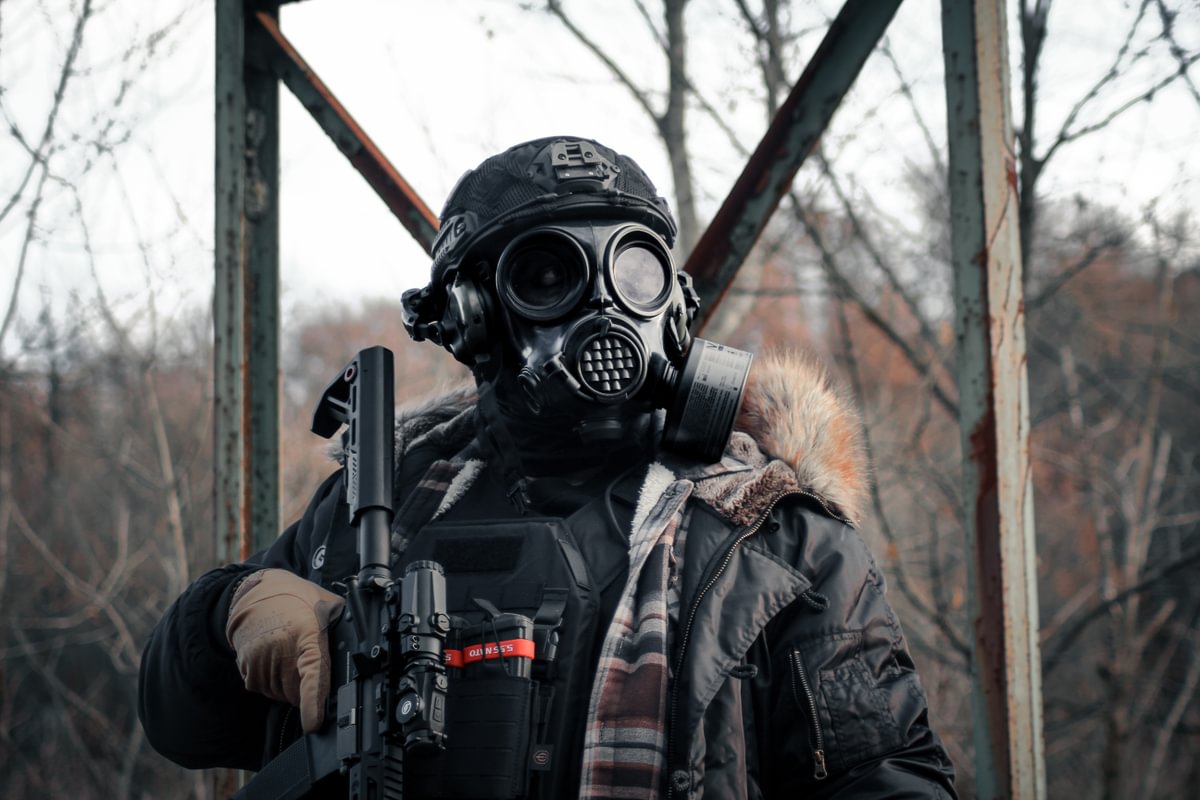
Gas masks and respirators have come a long way in terms of design and materials. From their beginnings in the trenches of World War 1, through the rapid pace of technological advancement of the 20th and 21st Centuries, modern gas masks and respirators are sophisticated pieces of kit that have generations of hard-worn experience behind them. That’s a very good thing too since chemical and radiological threats to human health are more dangerous than ever. So just how do gas masks and particulate respirators stand up to highly corrosive sulfur agents and nerve gases that can seep through skin in seconds? The first gas masks Modern gas masks and respirators Filter Materials Conclusion
Table of Contents
The first gas masks

Before the late 1800s, miners and firefighters had little more than wet clothes tied to their faces to protect themselves against coal dust or poisonous smoke. The lucky ones might get a leather smoke hood, or a mask that used wet sponges to absorb some of the toxic vapor elements from the air before making it to the user’s airway. As you might imagine, leather is hot, heavy, and doesn’t react well to moisture, but it was better than nothing, if only just.
World War 1’s introduction of chemical warfare drove engineers and scientists to some much needed innovation. During the Second Battle of Ypres in 1915, the German side launched the first large-scale use of chemical weapons when they cracked open 5,730 cylinders filled with chlorine gas along a 4 mile line. As 170 metric tons of chlorine drifted across the battlefield, historians estimate 1,100 soldiers were killed and another 7,000 were injured by the choking gas. A few months later, the British responded with their own chlorine vapor attack during the Battle of Loos and the age of modern chemical warfare was born.

To protect against massed chlorine gas attacks, the first military gas masks used face pieces and hoods made from canvas with a rubberized coating. Metal canisters with activated charcoal inside made up the first filter cartridges, which proved effective at scrubbing chlorine from the air as it moved through the canister. The whole apparatus was held together with leather or natural rubber straps, making a cheap yet effective mask that could be distributed to troops across the front.

However, the chemical arms race was just beginning, and both sides started wielding more and more dangerous weaponized gases. In December of 1915, the German side deployed phosgene gas, and in mid-1917, mustard gas was used for the first time. By 1918, 10% of all American artillery shells were filled with chemical weapons instead of explosives. These new generations of weaponized gases could soak through the first filter canisters in minutes, or were so reactive that they ate away at the mask material itself.
To protect against these more aggressive chemical agents, gas masks switched to all-rubber instead of a canvas-rubber mixture for the facepiece and hood. Filter canisters were expanded to contain thicker blocks of activated charcoal, and introduced new layers of filter media specifically treated with copper salts and sodium carbonate to break down the sulfur compounds in mustard gas instead of just trapping them. While these were much more effective than the first designs of protective gear, they weren’t perfect and not every soldier had the latest gear available to them. By the end of World War 1, chemical weapons caused an estimated 1.3 million casualties.
Modern gas masks and respirators

Image source: MIRA Safety ®
Gas masks and chemical weapons developed along parallel tracks over the rest of the 20th Century. The invention of new and more lethal weapons also drove the innovation of better protective gear and respiratory protection. Better research and production techniques meant that advanced gas masks became more comfortable and tight-fitting, and their use expanded outward from purely military applications to include industrial, medical, and disaster response settings as well. Input from professional and commercial fields helped masks respirators evolve into what they are today as lifesaving equipment that’s durable and comfortable enough to wear all day.
Construction materials

Image source: MIRA Safety
®
Gas masks use a variety of materials that depend largely on their intended use. Industrial or medical masks use silicone, neoprene, natural rubber, or thermoplastic for the majority of the facepiece that holds everything together. These materials are light and flexible, but they can’t stand up to corrosive compounds like mustard gas, and thin gases, like hydrogen cyanide, can seep right through them.
Tougher, CBRN-rated gas masks are made from bromobutyl rubber, which is dense enough to stop cyanide compounds and doesn’t react with mustard gas or other blister agents. Additionally, the lenses and faceplates are made from silicate glass or polycarbonate to avoid breakage and leaks during hard use. The interior details of the mask sometimes use a combination of natural rubber, nylon, and plastics, but since these aren’t directly exposed to a CBRN environment, they don’t compromise the integrity of the mask.
Filter materials
A gas mask is only as good as its filter and, much like the masks themselves, filter canisters are made to different specifications for different purposes. Some filter canisters are only designed to stop one particular gas or type of pathogens, while others are more multipurpose and cover a broad range of threats.
Speaking generally, basic filters will only have a single layer inside the canister, while more advanced ones will have multiple layers. Each layer traps or catalyzes a particular type of substance, so the more layers, the more substances a canister can filter. This adds weight and bulk, but especially for military use, the versatility makes up for it since it’s much harder to predict what type of CBRN threat personnel will encounter. Larger canisters also tend to last longer since there’s more filtering media inside. Canister housings are usually made of a non-reactive polymer these days, but some are still made out of metals like stainless steel or aluminum. Metal housings require an additional anodized or PTFE coating to prevent the bare metal from reacting and degrading in a CBRN environment.
Getting more specific,
In addition to the
Finally, different canisters can have additional layers designed to capture or neutralize specific compounds. It all depends on the intended use of the canister and there’s far too many to name here, so check the manufacturer’s label if you’re curious about how a particular filter achieves its protection. Here is a quick rundown of the materials used in some of our filters:
-

Image source: MIRA Safety ®
-
P3 particulate filter with hydrophobic coating
-
Activated carbon layer with additional treatment against CBRN agents including radioactive iodine
-
Type and Class: A2B2E2K2Hg D R SX
-
-
Intended use: Broad spectrum CBRN protection
-
-

Image source: MIRA Safety ®
-
P3 particulate filter with hydrophobic coating
-
250 ㎤ of activated carbon, three times as much as competing riot control filters
-
Type and Class: A2P3 D R SX-LE
-
-
Intended use: Protection against riot control agents like tear gas (CS) and pepper spray (OC)
-

Image source: MIRA Safety ®
-
-
P3 particulate filter
-
Treated activated carbon layer
-
Type and Class: A2B2E2K2HgNO20COP3 R
-
-
Intended use: Protection against toxic industrial chemicals, smoke, and carbon monoxide
-
Conclusion
Modern gas masks are made for durability, comfort, and versatility. They’re far more user-friendly than the first models from World War 1 and the best mask/filter combos are much more protective against a wider range for CBRN agents than anything available in the last century. We list the exact materials used in all our masks so there’s never any doubt about what threats our products will defend against.
Frequently Asked Questions
About the author
