How Experts Evaluate the Best Hazmat Suit Fabrics
When professionals evaluate what separates an ordinary protective coverall from a true hazmat suit, the first thing they look at is the fabric. Not all military hazmat suit materials are engineered for the same threats, and understanding these differences is key to selecting gear that performs in real emergencies—not just on controlled job sites.
Our CBRN hazmat suit is specifically designed to protect the wearer against specific chemical categories, industrial splash, and more.
More advanced industrial suits use coated fabrics or single-layer laminates, which offer better splash resistance but are often designed for specific chemical categories—not the broad-spectrum threats involved in CBRN events.
High-performance hazmat suits—those used by emergency response teams, military units, and CBRN specialists—are built from multi-layer barrier laminates engineered to:
- Resist chemical permeation
- Block a wide range of liquids and vapors
- Built to reduce the likelihood of punctures and abrasions
- Maintain flexibility under extended wear or movement
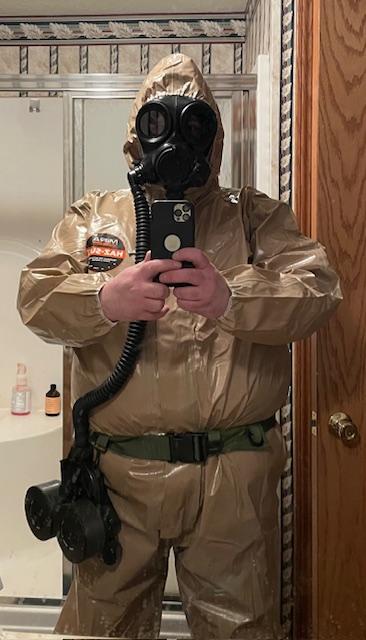
The HAZ-SUIT® fabric falls into this professional and military category. Its multi-layer composite has been extensively tested against more than 125 chemical threats, including toxic industrial chemicals (TICs) and chemical warfare agents (CWAs). Long-term aging studies show that the barrier retains its performance for decades when stored correctly.
Combined with heat-sealed/taped seams, the HAZ-SUIT® forms a unified barrier system suited for unpredictable, high-stress environments.
Hazmat Suit Use Cases and Emergency Response Applications
This reusable hazmat suit is used extensively by:
- Major fire departments for hazmat response
- Large hospitals for emergency preparedness
- Industrial and petrochemical companies
- Multiple branches of the U.S. military and other government agencies
Emergency medical responders, industrial safety teams, and preparedness-minded civilians rely on this protective suit when working in hazardous environments.
Our military-grade hazmat suit has undergone long-term storage testing under various environmental conditions. When stored in a cool, dry location away from sunlight, it demonstrates no measurable degradation—even after decades—making it a strong option for long-term preparedness and emergency planning.
CBRN Protection Level and Suit Performance
The MIRA Safety® HAZ-SUIT® is designed for hazardous applications involving chemical splashes, particulates, and vapor exposure. Its multi-layer barrier laminate, abrasion resistance, and broad-spectrum chemical testing provide durability and reliability for environments where low-cost disposable suits are inadequate.
Radiological protection (at a glance): The HAZ-SUIT® helps protect against radioactive particulates by preventing alpha-emitting dust and many beta contaminants from contacting the skin or clothing. Like all suits in its class, it does not shield against penetrating gamma or neutron radiation; radiological safety in such scenarios depends on time, distance, shielding, and proper respiratory protection to prevent inhaling radioactive particulates.
-
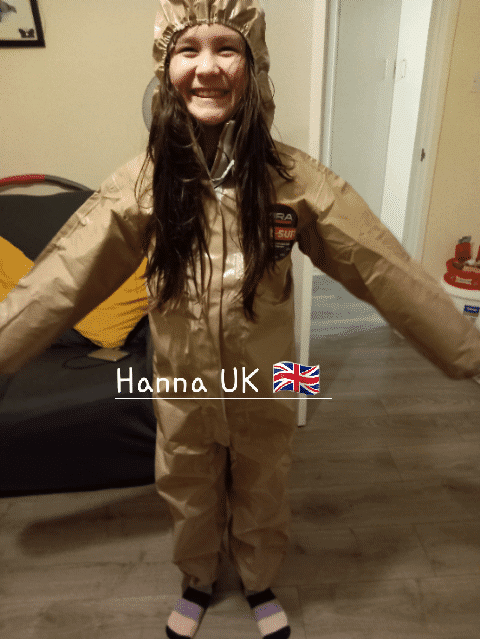
Complete protection for all ages: Available in youth and adult sizes to provide personal protection for children as young as 4 years old through large adults.
-
Professional-grade CBRN defense: Designed for civil defense, emergency response, and hazardous environments requiring true CBRN resistance—not just light-duty splash protection.
-
Trusted by professionals worldwide: Used by military units, fire departments, hospitals, and industrial hazmat teams globally.
-
Extended practical shelf life: Long-term aging tests show its multi-layer barrier fabric maintains performance for decades when properly stored.
-
NFPA-certified options: Certain configurations are available for bulk orders requiring specialized certification.
-
Made in the USA: Manufactured in partnership with Kappler, a U.S. leader in chemical protective apparel.
-
Proven chemical protection: Tested and proven against a wide range of CWAs and TICs.
-
Enhanced durability: High tensile and puncture resistance help protect against hazards in debris-filled or unpredictable environments.
-
Advanced seam sealing: Heat-sealed and taped seams create a consistent, reliable barrier.
-
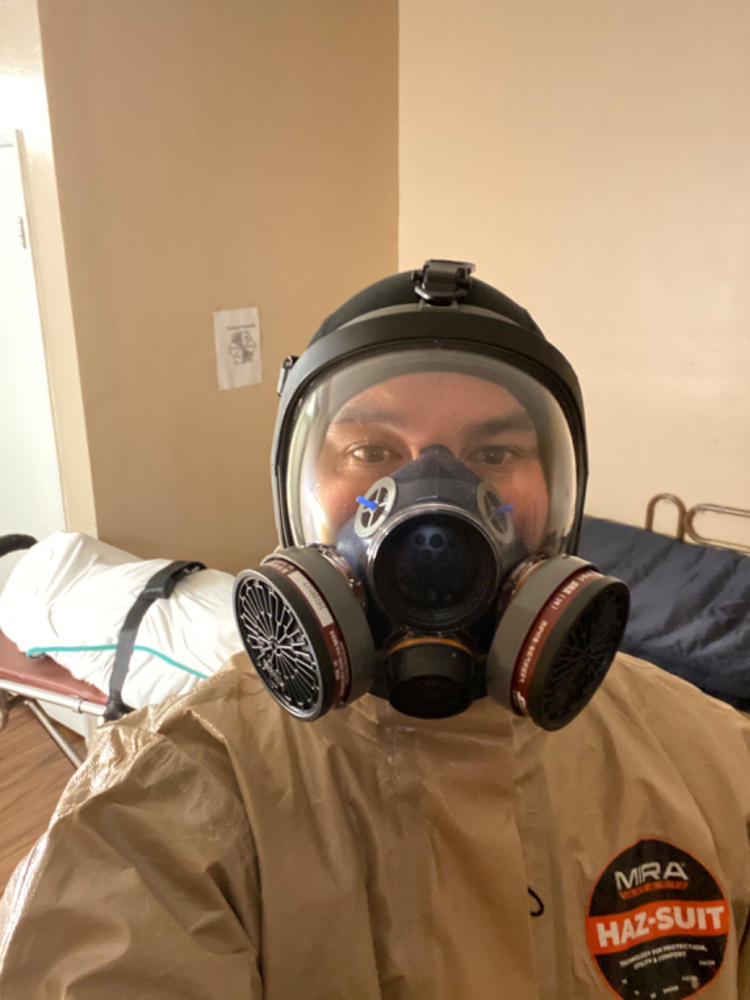
Universal compatibility: Integrates with MIRA Safety gas masks, full-face respirators, gloves, boots, and chemtape for a complete protective ensemble.
Typical applications: Civil defense, emergency response, military operations, drug-lab response, chemical handling, petrochemical maintenance, pandemic readiness, and toxic waste or contaminated site cleanup.
Many protective coveralls are designed for controlled industrial tasks where exposure is predictable and short-term. The HAZ-SUIT® addresses a different need: unpredictable events, extended exposure windows, and the possibility of encountering some of the most dangerous modern threats.
Its puncture-resistant, multi-layer barrier laminate is similar to the materials used in high-end CBRN suits globally. When worn with a PAPR or air-purifying respirator, the HAZ-SUIT® functions as a Level C hazmat suit. When paired with an SCBA, it can be used as part of a Level B ensemble.
The suit is engineered for up to eight hours of direct exposure to numerous chemical agents and radioactive particulates listed in standardized tests. With proper respiratory protection, gloves, boots, and chemtape, it forms a complete system suitable for a wide range of hazardous environments.
When stored correctly, it remains ready for use for decades, offering a long-term preparedness advantage.
How long do hazmat-suits last? The HAZ-SUIT® can last up to twenty years. A coverall using the twenty-year-old HAZ-SUIT® fabric was tested against the ASTM F1001 list of twenty-one chemicals with no breakthrough in >480 minutes.
The aged fabric was also tested for its physical properties and still meets manufacturing specifications. Based on this information, MIRA Safety considers the shelf life of its HAZ-SUIT® products to be undetermined.
Chemical suits contain components made from various polymer or rubber materials for which there is no shelf life data available. Therefore, the garments may be used as long as they are deemed safe after a visual inspection and, in the case of vapor protective (Level A) garments, after passing the ASTM F1052 pressure test. It is recommended that suits are downgraded to training use only when they no longer pass visual inspection and/or pressure testing.
It is the wearer's responsibility to ensure that all components, including fabric, valves, visors, gloves, zippers, seams, and suit-to-component interfaces, are in good working condition and provide adequate protection for the conditions and chemicals to be encountered. Any suit that does not pass the visual and/or pressure test should be immediately removed from service.
Frequently Asked Questions: Biohazard and Radiation Hazmat Suits
What does a hazmat suit protect against?
A hazmat suit provides a barrier against hazardous chemicals, biological agents, and radioactive particulates. When paired with an appropriate respirator, it becomes part of a complete system intended to reduce exposure to dangerous contaminants.
What are the four levels of hazmat suits?
Hazmat protection is commonly grouped into four levels:
-
Level A – Fully encapsulating, maximum skin and respiratory protection with SCBA.
-
Level B – High respiratory protection with a non-encapsulating suit and SCBA.
-
Level C – APR/PAPR with chemical protective clothing.
-
Level D – Basic protective clothing with minimal hazard protection.
What is the difference between a hazmat suit and a biohazard suit?
A hazmat suit protects against chemical, biological, and particulate threats. A biohazard suit specifically targets biological agents. The HAZ-SUIT® is designed as CBRN protective wear, making it suitable for both roles when paired with the right respirator.
Are hazmat suits reusable?
Some hazmat suits may be reused if contamination is light and proper decontamination procedures are followed. Others should be discarded after exposure to liquid chemicals or severe contamination. Always inspect suits and follow applicable safety protocols.
Do hazmat suits like the HAZ-SUIT® stop radiation?
Hazmat suits do not block gamma or neutron radiation. They do, however, help reduce exposure in radiological events by:
-
Blocking alpha-emitting particulates, which cannot penetrate intact skin but are dangerous if inhaled or ingested.
-
Reducing contact with many beta-emitting contaminants by keeping radioactive fallout off the skin and clothing.
Gamma exposure must be managed through time, distance, and shielding. Respiratory protection is essential because radioactive dust cannot be removed from the lungs once inhaled. The HAZ-SUIT® helps keep contamination off your body; your respirator helps keep it out of your lungs.
Make sure to keep a close eye on children wearing the HAZ-SUIT®. Considering the non-breathable nature of the material (a result of keeping contaminants out), it can get hot while wearing the suit and can cause overheating or dehydration. If your child looks like they are overheating at any time, it is important to evacuate to safety and remove the suit as soon as possible to avoid injury or death.
It is up to the guardians of children to determine when wearing the HAZ-SUIT® is no longer safe, and guardians accept all responsibility for necessary training.
Some gases and vapors can be absorbed through the skin. While the HAZ-SUIT® has been tested and proven to block these contaminants in liquid form, no non-encapsulated suit can guarantee complete protection from all gases and vapors.
The HAZ-SUIT® is designed with an elastic hood, wrists, and ankles. When paired with appropriate hazmat gloves, a properly fitted gas mask, and chemical-resistant boots, the entry of vapors and gases is significantly limited—but not entirely eliminated.
For maximum vapor and gas protection, a fully encapsulated Level A hazmat suit with an SCBA system is required. However, such systems are costly and complex and may not be practical for all users.
Another option is a MOPP suit, such as the MOPP-1 CBRN suit from MIRA Safety®. These suits are lined with carbon to passively absorb gases and vapors while providing a durable, more breathable outer shell for extended wear.